
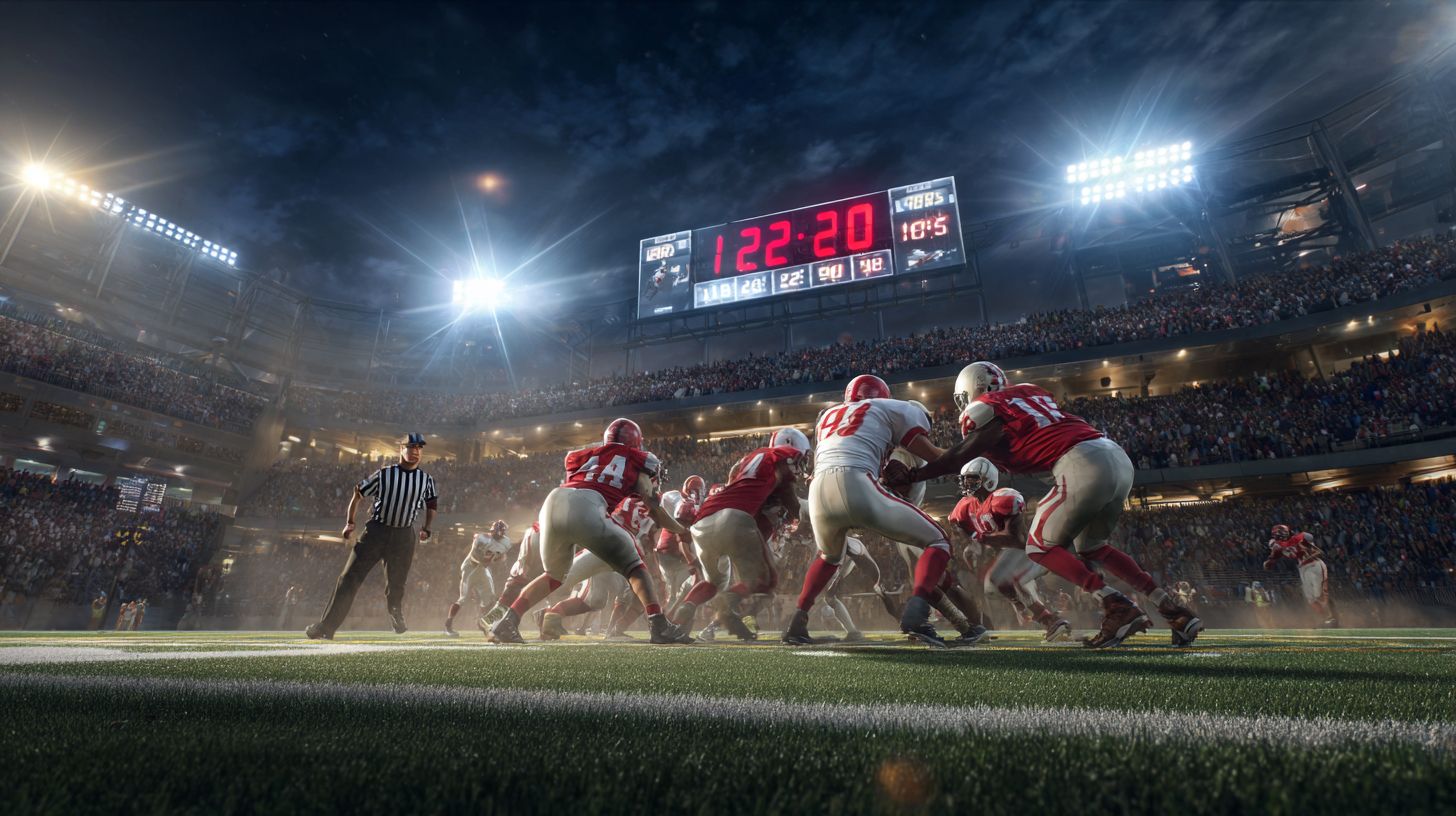
How long is an American football game billed as one hour long stretches into a marathon. Why the disconnect? This essential guide unpacks the four 15-minute quarters, intricate clock mechanics, halftime breaks, timeouts, and TV timeouts that balloon real-world duration to 3-3.5 hours on average. Discover how these elements shape the ultimate gridiron spectacle-and keep you glued to your seat.
Official Game Duration

NFL rules specify a 60-minute game divided into four 15-minute quarters, but real-world elapsed time far exceeds this due to stoppages. The 2023 NFL Rulebook from NFL.com, Article 7, Section 1, sets this as the official game duration for professional football. In practice, factors like timeouts, challenges, and commercial breaks stretch the total football game length.
Games typically last three hours or more from kickoff to final whistle. Stoppages include TV timeouts, injury timeouts, and the two-minute warning. This creates a clear gap between game clock time and actual game time.
Average play count falls around 65-70 per game, per StatMuse data, with each snap taking time due to huddles, the 40-second play clock, and resets after incomplete passes or out-of-bounds plays. Clock management tactics, like kneeling to run out the clock, also add to total game time. These elements define how long a football game feels for fans in the stadium atmosphere.
Halftime, often 12-15 minutes in regular season games, includes the halftime show in events like the Super Bowl. Playoffs and primetime games, such as Monday Night Football, may extend further with extra reviews. This structure shapes the fan experience, from tailgating to concessions.
Four 15-Minute Quarters
Each NFL quarter lasts exactly 15:00 on the game clock, totaling 60 minutes of official playing time. Quarters one and two form the first half at 30 minutes, while quarters three and four make the second half. The clock displays in MM:SS format, counting down from 15:00 to 00:00 per quarter.
Visualize a timeline: Quarter 1 starts at 15:00, runs through downs, touchdowns, and punts, hitting 00:00 after key plays like field goals or turnovers. The same applies to each 15-minute quarter. Stoppages, such as penalties for holding or pass interference, pause this progression.
In Super Bowl LVII, the clock showed 12:47 remaining in Q4 when Mahomes threw the game-winning touchdown. This example highlights how football quarters unfold amid sacks, interceptions, and clock stoppages on incomplete passes. Referee decisions and instant replay reviews further manage game time.
Halftime separates halves, allowing player rest and entertainment. Overtime rules apply if tied, with NFL overtime starting as sudden death in regular season. College and high school football adapt these quarters differently, but pro games stick to this core NFL game duration framework for consistency.
The Game Clock Mechanics
The game clock only runs during active plays, stopping for incomplete passes, out-of-bounds, scores, and penalties. In a typical American football game, teams average 65-70 plays, according to Pro Football Reference. The clock stops on about 70 percent of those plays, which stretches the actual game time well beyond the four 15-minute quarters.
This stoppage mechanic creates the bulk of stoppage time in an NFL game duration. Running plays that stay in bounds keep the clock moving, while passes and other events halt it. The NFL operations manual outlines these clock rules in detail, ensuring consistency across professional football.
Understanding these basics helps fans grasp why a game with 15-minute quarters lasts three hours or more. Factors like timeouts, challenges, and the two-minute warning add even more pauses. This setup allows for strategic clock management, such as kneeling to run out the clock late in games.
From kickoff to final whistle, these mechanics define football game length. Teams exploit stops for huddles and adjustments, while offenses like no-huddle schemes speed things up. Next, explore how the clock runs or stops on specific plays.
Running vs. Stopping the Clock
Clock runs continuously on running plays that stay in-bounds, but stops immediately on incomplete passes. A running back carrying inside the hash marks keeps the clock ticking after the whistle. This contrast shapes clock management strategies in every NFL game.
| Play Type | Clock Behavior | Examples | Time Impact |
|---|---|---|---|
| Running Clock Plays | Runs continuously | RB run inside hash marks, touchback after 2:00 warning | Minimizes stoppages, speeds up game |
| Stopping Clock Plays | Stops immediately | Incomplete pass, sack, out-of-bounds run | Extends total game time significantly |
Experts reference NFL Next Gen Stats for clock stoppage patterns on these plays. For instance, a quarterback sack halts the clock, giving defenses time to regroup. Touchbacks run the clock after the two-minute warning to prevent late-game manipulations.
Offenses spike the ball or use hurry-up to stop the clock intentionally. Defenses force incompletions or out-of-bounds tackles for the same effect. These decisions influence game time and outcomes, especially in close contests.
Play Clock (40 Seconds)
Teams have 40 seconds from the previous play’s spot to snap the ball, with 10-second runoff penalties for violations. Rule 4, Section 5 of the NFL rulebook details this 40-second play clock, which resets after certain stoppages to 25 seconds. Violations like delay of game cost yardage and time.
Here’s a typical timeline for setting up a play:
- Referee spots the ball (0 seconds).
- Chains and down markers set (5-8 seconds).
- Huddle breaks, quarterback calls signals (15-20 seconds).
- Players at the line, cadence begins (35 seconds).
- Center snaps the ball (39 seconds).
No-huddle offenses, like those run by the Chiefs, average under 30 seconds on the play clock. This tempo disrupts defenses and limits their adjustments. It shortens overall football game length while pressuring opponents.
Penalties such as false start or offsides often stem from play clock pressure. Coaches teach linemen to watch the referee’s ready signal closely. Mastering this rhythm improves fan experience by keeping games moving briskly.
Halftime and Breaks
Structured breaks including 12-15 minute halftime and 2-minute between-quarter breaks significantly extend actual game time. Total break time adds 25-30 minutes per NFL game. Halftime alone generates substantial revenue, as seen in Super Bowl LVII.
NFL scheduling guidelines set these pauses to allow team adjustments and fan refreshment. Players head to locker rooms for coaching talks. Commercials and stadium announcements fill the air during these stops.
Between quarters, crews reset the chains and down markers. This keeps the game clock precise amid commercial breaks. Fans grab concessions or check fantasy football scores in these moments.
These interruptions shape the fan experience in professional football. Tailgating crowds return to seats, building stadium atmosphere. Understanding them helps predict total game time beyond the four 15-minute quarters.
Halftime Length (12-15 Minutes)
Regular season halftime lasts 13:00 minutes; Super Bowl extends to 25-30 minutes for performances (Rihanna 2023: 27 minutes). Teams exit to locker rooms at the whistle. Coaches review film and adjust strategies for the second half.
Timeline unfolds quickly: at 0:00, teams to locker room; 2:00, field clearing by crews; 5:00, entertainment setup begins; 10:00, teams return warming up. Field crews handle hash marks and goalposts. This pace suits TV timeouts and ads.
Playoffs feature 15:00 minute halftimes for intensity buildup. Regular season keeps it shorter to maintain flow. Super Bowl halftime shows draw peak viewership, blending music with football culture.
Fans use this break for beer sales and concessions lines. Stadium screens replay highlights like touchdowns or sacks. It refreshes the crowd before kickoff resumes the hurry-up offense or clock management.
Between-Quarter Intermissions
Each quarter transition includes 2:00 intermissions plus chain resets and commercial breaks totaling 5-7 minutes. Quarter ends, teams huddle briefly. Officials spot the ball amid TV timeouts.
Typical timeline: 0:00 quarter ends; 0:30 team huddles form; 1:30 chains move to new lines; 2:00 next quarter starts with snap. Three such breaks add up across the game. Crews manage down markers and sidelines precisely.
- Quarter whistle blows, play clock stops.
- Players huddle, coaches signal from sidelines.
- Chains reset for first down yardage.
- Commercial slate airs, fans head to restrooms.
- New quarter kicks off with quarterback center exchange.
These pauses total 15-21 minutes game-wide, per expert timing notes. They allow injury timeouts or challenge reviews if needed. Primetime games like Monday Night Football stretch them for extra ads.
Timeouts Impact
Three timeouts per team per half add 6-9 minutes of stoppage time, plus official timeouts and challenges. Teams average 5.8 timeouts used per game in 2023. Each timeout lasts 2:00 in actual time.
Injury timeouts average 1.2 per game, often extending game clock stoppages. These pauses allow medical staff to assess players on the field. They contribute to the difference between football game length and total elapsed time.
Official TV timeouts and challenge reviews add more delays. Coaches use timeouts for clock management, like stopping the clock on fourth down. This impacts NFL game duration, especially in close matches.
Strategic timeout use affects hurry-up offense and defensive adjustments. In playoffs, saving timeouts for the final drive can decide outcomes. Fans experience longer actual game time due to these breaks.
Team Timeouts per Half
Each team receives 3 timeouts per half (6 total), with unused timeouts not carrying over between halves. This follows Rule 5, Article 1 in the official rulebook. Teams must plan usage across 15-minute quarters.
Coaches balance saving timeouts for late-game situations with immediate needs. The two-minute warning provides an official stoppage, so teams often save one there. This helps manage the game clock effectively.
| Situation | Optimal Timeout Use | Example |
|---|---|---|
| 2:00 warning | Save 1 timeout | Quarterback huddles briefly while clock runs to official stop |
| Goal line stand | Use immediately | Defense calls timeout before snap to adjust against running back dive |
| 4th down decision | Use pre-kick | Special teams aligns as coach discusses field goal vs. punt |
In 2023, the Chiefs saved 2 timeouts for their final drive, enabling a touchdown drive. This clock management tactic preserved options against no-huddle offense. It highlights how timeouts shape professional football outcomes.
Real-World Game Length
Despite 60 official minutes on the game clock, NFL games average 3 hours 10 minutes elapsed time in the 2023 season. This includes about 170-180 total plays with frequent stoppages for commercials, injuries, and reviews. Actual game time stretches far beyond the four 15-minute quarters due to these interruptions.
Pro Football Reference data from 2023 shows an average of 3:07:42 per regular season game. Factors like TV timeouts, halftime, and the two-minute warning add significant stoppage time. Fans planning to attend should expect the full total game time to impact their stadium experience.
Understanding how long is an American football game helps with tailgating schedules and concessions timing. Primetime games often run longer due to extra commercial breaks. Weather delays or challenge reviews can push elapsed time even further.
Clock management plays a key role, from hurry-up offense to kneeling on fourth down. Overtime rules extend games when tied after regulation. This real-world duration shapes the fan experience more than the official football quarters.
Average Duration (3-3.5 Hours)
2023 regular season average: 3:07:42; playoffs average 3:22:15; Super Bowl LVII lasted 4:15:37. These figures from NFL Operations and StatMuse highlight how NFL game duration varies by stakes. Regular games move faster than high-pressure playoff matchups.
| Season/Game Type | Average Duration |
|---|---|
| 2023 Regular Season | 3:07:42 |
| 2023 Playoffs | 3:22:15 |
| Super Bowl LVII | 4:15:37 |
Extremes include the shortest game at 2:25 (1977 Rams) and the longest game at 5:02 (2018 Eagles). Variance shows by day of week, with Monday Night Football averaging 3:18 due to extra ads. Sunday games tend to wrap quicker.
- Regular season: Fewer reviews keep pace steady.
- Playoffs: More instant replay challenges extend time.
- Super Bowl: Halftime show and ceremonies add over an hour.
Practical tip for fans: Arrive early for kickoff amid turnstile count crowds. Track football game length via apps during primetime games. This prepares you for post-game traffic and beer lines at halftime.
TV Timeouts and Commercials
Network-mandated TV timeouts add 18-24 minutes per game, with 16-20 commercial breaks averaging 3:00 each. These breaks occur at specific points to allow broadcasters like CBS, Fox, and NBC to air ads. They extend the total game time beyond the 60 minutes of game clock.
In the 1st quarter, teams face 4 TV timeouts, each lasting 2:00. The halftime period includes 14:00 of commercials after the halftime show setup. The 4th quarter has 6 breaks, including extra ones for primetime games.
Primetime matchups on Monday Night Football or Sunday Night Football add 4 extra breaks. This boosts revenue from TV deals worth billions. Networks schedule these to maximize ad sales during high-viewership games.
During a CBS 2023 timeout schedule, breaks hit after the first first down in each quarter, post-two minute warning, and between plays. Research suggests around 30% of fans leave seats during commercials, impacting stadium atmosphere and concessions sales. This affects the fan experience in professional football.
Frequently Asked Questions
How long is an American football game?
An American football game in the NFL typically lasts about 3 hours in real time, despite the game clock totaling 60 minutes of play divided into four 15-minute quarters. This includes stoppages, timeouts, replays, and halftime.
How long is an American football game including overtime?
If the game is tied after regulation, overtime adds 10 minutes in the playoffs or a sudden-death period in the regular season, potentially extending the total real time beyond 3 hours for “how long is an American football game.”
How long is an American football game at the college level?
College football games, like those in the NCAA, also feature four 15-minute quarters for a 60-minute clock, but they often run 3 to 3.5 hours total, similar to the NFL answer for “how long is an American football game.”
How long is an American football game in high school?
High school American football games use four 12-minute quarters (48 minutes total clock time) and usually last 2 to 2.5 hours, shorter than pro games when considering “how long is an American football game.”
How long is an American football game with all the commercial breaks?
TV broadcasts of NFL games include numerous commercials, stretching the event to around 3 to 3.5 hours; without them, “how long is an American football game” would be quicker, closer to 2.5 hours of pure action.
How long is an American football game from kickoff to final whistle?
From kickoff to the final whistle, an NFL American football game averages 3 hours and 10 minutes, accounting for all pauses- that’s the standard real-world duration for “how long is an American football game.”