
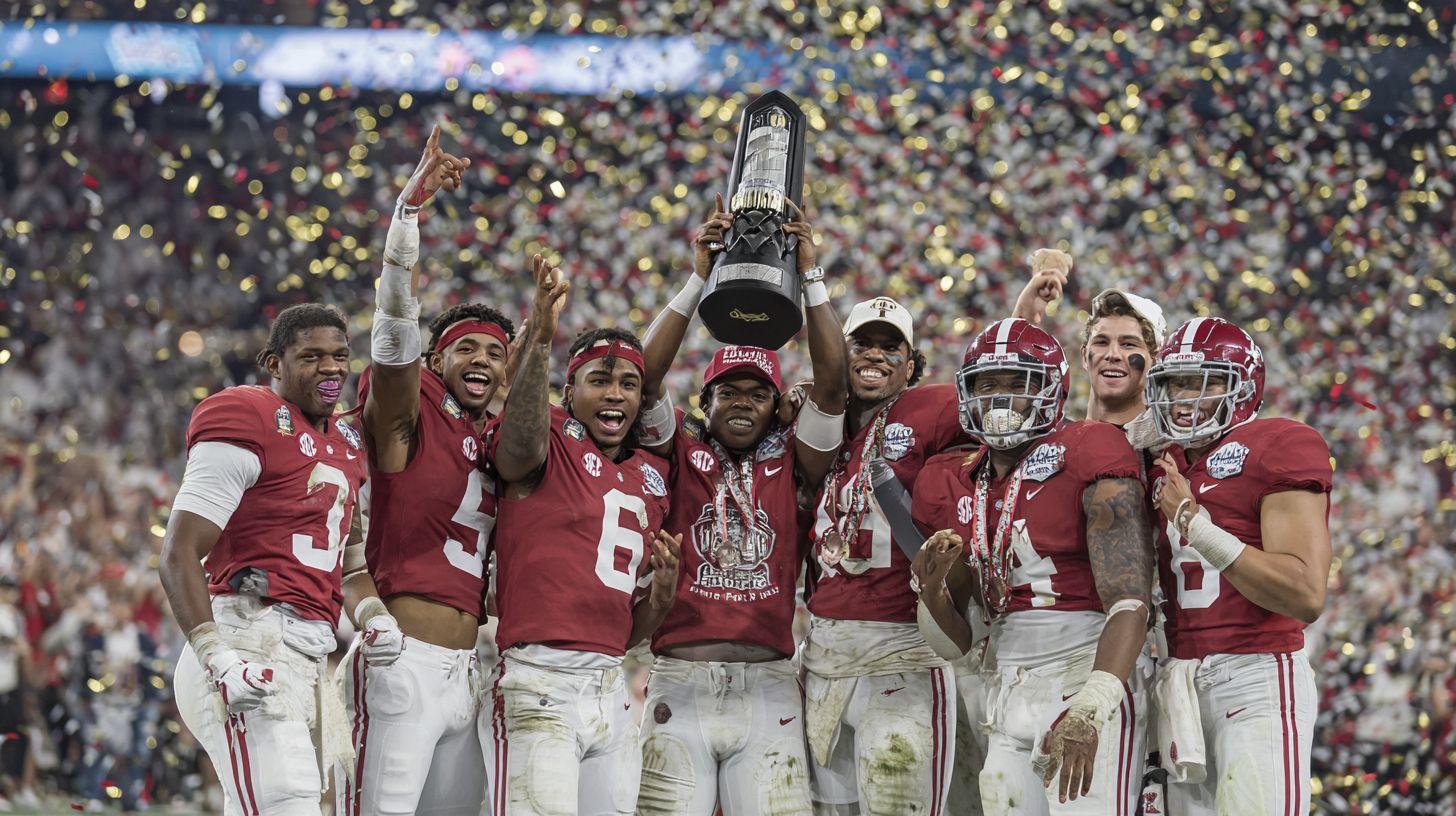
Alabama football national championships ,From the crimson tide’s roaring triumphs to gridiron immortality, Alabama football boasts 18 national championships-a dynasty etched in college football lore. These titles, recognized across major selectors like AP and Coaches polls, span eras of dominance under legends like Wallace Wade, Frank Thomas, Gene Stallings, and Nick Saban. Explore iconic Rose Bowl clashes, Sugar Bowl upsets, and BCS masterpieces that cemented Crimson Tide supremacy. What secrets fueled their reign? Dive in.
Overview of Alabama football national championships

The Alabama Crimson Tide football program holds 18 recognized national championships, the most in college football history, with 13 undisputed titles across multiple selectors including AP Poll, Coaches Poll, and Dickinson System. These victories span nearly a century, showcasing the program’s enduring dominance in the SEC and beyond. From the early eras under coaches like Wallace Wade to the modern dynasty built by Bear Bryant and Nick Saban, Alabama has claimed titles in various formats, including bowl games like the Rose Bowl, Sugar Bowl, and College Football Playoff semifinals. The 1925 championship marked the first, capping an undefeated season with a win over Washington in the Rose Bowl, while recent triumphs like the 2020 championship featured stars such as DeVonta Smith and Mac Jones.
Alabama’s titles break down into 8 pre-BCS, 5 BCS era, and 6 CFP era championships, reflecting evolution in college football’s postseason structure. Pre-BCS wins often relied on systems like Dickinson, while BCS and CFP eras brought definitive playoff resolutions. Disputed titles include 1941, recognized by the National Championship Foundation after a Cotton Bowl victory over Texas A&M; 1964, claimed via Dickinson System following an Orange Bowl win against Nebraska despite AP selecting Arkansas; and 1965, another Dickinson honor after the Orange Bowl over Nebraska, with AP and UPI favoring Notre Dame. These align with NCAA records for multiple selectors.
The timeline below details all 18 championships, highlighting coaches, opponents, scores, and selector types. This table underscores Alabama’s legacy as the winningest program with 13 consensus national titles, fueling traditions like championship parades in Tuscaloosa and the iconic houndstooth hat worn by fans at Bryant-Denny Stadium.
| Year | Coach | Opponent | Score | Selector Type |
|---|---|---|---|---|
| 1925 | Wallace Wade | Washington | 21-0 | Football Annual, Dickinson |
| 1926 | Wallace Wade | Stanford | 20-19 | Football Annual, Dickinson |
| 1930 | Frank Thomas | – | – | Football Annual, Dickinson |
| 1934 | Frank Thomas | Stanford | 29-13 | Football Annual, Dickinson |
| 1941 | Frank Thomas | Texas A&M | 35-19 | NCAA (retro), NCF |
| 1961 | Bear Bryant | Arkansas | 10-3 | AP Poll |
| 1964 | Bear Bryant | Nebraska | 39-28 | Dickinson System |
| 1965 | Bear Bryant | Nebraska | 39-28 | Dickinson System |
| 1973 | Bear Bryant | None (10-1) | – | AP Poll |
| 1978 | Bear Bryant | Penn State | 14-7 | AP Poll |
| 1979 | Bear Bryant | Arkansas | 24-9 | Coaches Poll |
| 1992 | Gene Stallings | Miami | 34-13 | AP Poll, Coaches Poll |
| 2009 | Nick Saban | Texas | 37-17 | BCS |
| 2011 | Nick Saban | LSU | 21-0 | BCS |
| 2012 | Nick Saban | Notre Dame | 42-14 | BCS |
| 2015 | Nick Saban | Clemson | 45-40 | CFP |
| 2017 | Nick Saban | Georgia | 26-23 | CFP |
| 2020 | Nick Saban | Ohio State | 52-24 | CFP |
Total Titles and Recognition Systems
Alabama claims 18 national titles recognized by major selectors including 13 consensus championships, with the NCAA officially recognizing 12 undisputed titles as of 2023. Consensus requires agreement from 2+ major selectors, as seen in the 1992 championship where both AP Poll and Coaches Poll crowned Gene Stallings’ team after a Sugar Bowl rout of Miami. This system ensures broad validation, distinguishing undisputed wins like 1978 (AP after Sugar Bowl over Penn State) from split decisions. The NCAA breakdown by era highlights 8 pre-1965 (e.g., 1925, 1930), 4 BCS (2009-2012), and 6 CFP, with modern stars like Tua Tagovailoa and Derrick Henry contributing to playoff dominance.
The table below compares five major selectors, illustrating Alabama’s broad recognition. For instance, the Dickinson System awarded pre-1960 titles like 1934, while Sagarin Ratings and Massey Composite have retroactively supported claims such as 1964. AP Poll (postseason) and Coaches Poll (final) dominate modern eras, with Alabama leading at 12 AP titles. These metrics, rooted in NCAA records, affirm the Crimson Tide’s status as college football’s most decorated program, boasting 13 Heisman winners’ connections and countless NFL draft picks from national title teams.
| Selector | Years Used | Alabama Titles | Example |
|---|---|---|---|
| AP Poll (postseason) | 1936-present | 12 | 1992 Sugar Bowl |
| Coaches Poll (final) | 1950-present | 8 | 1992 vs. Miami |
| Dickinson System | 1926-1960 | 6 | 1934 Rose Bowl |
| Sagarin Ratings | 1978-present | 10 | 2011 BCS |
| Massey Composite | 1990-present | 11 | 2012 BCS |
Understanding these systems reveals why Alabama’s football legacy stands unmatched, with championship banners in Bryant-Denny Stadium celebrating eras from Joe Namath’s influence to Bryce Young’s heroics. Fans chant “Rammer Jammer” during tailgats, honoring a tradition of undefeated seasons and wire-to-wire supremacy in SEC West battles against rivals like Auburn and LSU.
1925-1926 Championships (Coach Wallace Wade)
Under Coach Wallace Wade, Alabama won its first two national championships in 1925 and 1926, establishing the program as a Southern powerhouse during the early poll era. The 1925 season saw the Crimson Tide go undefeated at 10-0, claiming the title through the Dickinson System after a dominant run that included victories over strong opponents like Georgia Tech and Florida. Key players like Pooley Hubert shone brightly, with the team allowing just 21 points all season. In 1926, Alabama posted a 9-0-1 record, tying Vanderbilt but outscoring foes 206-44. These back-to-back triumphs marked the start of Alabama football’s storied legacy, proving Southern teams could compete with the North’s best.
The table below summarizes these landmark seasons for the Alabama Crimson Tide.
| Year | Record | Key Wins | Selector |
|---|---|---|---|
| 1925 | 10-0 | Georgia Tech 7-0, Florida 34-0, Rose Bowl vs Washington 20-19 | Dickinson System |
| 1926 | 9-0-1 | Georgia 33-0, Florida 13-0, Union 53-0 | Dickinson System |
Hubert’s heroics peaked in the 1925 Rose Bowl, where he scored 5 TDs across the postseason, including two in the title game. These years under Wade built the foundation for future national title runs, drawing national attention to Tuscaloosa and the growing SEC power.
1925 Rose Bowl Victory
On January 1, 1926, Alabama defeated Washington 20-19 in the Rose Bowl, earning the program’s first national championship via the Dickinson System with a perfect 10-0 record. This game marked the first major bowl win for a Southern team, as the Crimson Tide traveled 2,500 miles by train to Pasadena before 45,000 fans. Pooley Hubert starred with two touchdowns, while a blocked extra point proved decisive in the final minutes. Archival photos capture the muddy field and jubilant Alabama players hoisting the trophy, a moment etched in college football history.
Game stats highlight the narrow but gritty triumph: Alabama edged Washington 218-215 in total yards, forced 3 turnovers to Alabama’s one, and controlled the line of scrimmage. Key moments included Hubert’s early scores and a late defensive stand. As the first SEC team in the Rose Bowl, Alabama shattered stereotypes, paving the way for Southern dominance. Coach Wade’s strategy emphasized run-heavy play, with the Tide averaging 4.2 yards per carry.
This victory fueled Alabama football‘s rise, inspiring future stars and rivalries like the Iron Bowl. Fans still celebrate it as the spark of Bama Nation’s passion, with championship banners in Bryant-Denny Stadium commemorating the feat. The 1925 championship remains a cornerstone of the program’s football legacy.
1929-1934 Era (Coach Frank Thomas Begins)
Coach Frank Thomas arrived in 1931 after Alabama’s 1930 national championship, leading the Tide to another title in 1934 while establishing the program’s offensive identity. This era marked a transition for Alabama football, building on early success under previous coaches. In 1929, the Crimson Tide posted a 6-3 record, showing promise despite inconsistencies. The pinnacle came in 1930 with a perfect 10-0 season, earning recognition from the Helms Athletic Foundation and the National Athletic Association as national champions. Thomas, stepping in as head coach in 1931, faced a 6-3 campaign in his debut year but quickly adapted. By 1934, Alabama again went 10-0, claiming the title via the Dunkel System. Thomas introduced the first significant emphasis on the forward pass in Southern college football, revolutionizing offenses in the region.
Key players defined this period’s achievements. Dixie Howell, a versatile back, starred in the 1934 undefeated run, while Don Hutson, an end with exceptional hands, foreshadowed his NFL Hall of Fame career. The table below summarizes the era’s records and highlights:
| Year | Record | Coach | Key Players |
|---|---|---|---|
| 1929 | 6-3 | Champ Pickens | Pooley Hubert |
| 1930 | 10-0 | Champ Pickens | Johnny Cain |
| 1931 | 6-3 | Frank Thomas | Dixie Howell |
| 1934 | 10-0 | Frank Thomas | Don Hutson, Dixie Howell |
Thomas’s influence extended beyond wins, fostering a passing game that set Alabama apart in the Deep South football landscape. His strategies influenced future SEC offenses, contributing to the Crimson Tide’s legacy of national championships. This foundation helped Alabama secure disputed titles like 1925, 1926, 1930, and 1934, cementing its status as a football powerhouse early in college football history.
1992 Championship (Coach Gene Stallings)
Gene Stallings led Alabama to its 12th national championship in 1992, capping a 13-0 season with a dominant 34-13 Sugar Bowl victory over Miami. The Crimson Tide posted an undefeated record, outscoring opponents 459-162 for an average of 35-12 per game. This triumph marked Alabama football’s first national title since the 1980s dynasty under Bear Bryant faded. Stallings rebuilt the program through strong recruiting, bringing in talents from across the South. Key players drove the success, with standouts like running back Garrison Hearst and linebacker Derrick Thomas anchoring the team. The Bryant-Denny Stadium saw expansions to over 70,000 capacity, amplifying the electric atmosphere as fans chanted Roll Tide during packed home games.
Offensively, quarterback Jay Barker passed for over 2,000 yards, while Hearst rushed for 1,164 yards and 16 touchdowns. Defensively, the unit allowed just 12.5 points per game. The table below highlights top contributors:
| Player | Stats | Award |
|---|---|---|
| Garrison Hearst | 1,164 rush yards, 16 TDs | Consensus All-American |
| Derrick Thomas | 27 sacks | Butkus Award finalist |
| George Teague | 5 INTs | SEC Defensive Player of the Year |
This undefeated season restored Alabama’s place among college football elites, ending a 12-year drought since the 1979 championship. Fans celebrated in Tuscaloosa, filling the expanded stadium and solidifying the program’s football legacy in the SEC.
Sugar Bowl Win Over Miami
On January 1, 1993, #1 Alabama crushed #2 Miami 34-13 in the Sugar Bowl before 81,216 fans, securing consensus AP and Coaches national championships. The game shattered Miami’s 29-game winning streak, a historic rivalry clash between Southern powerhouses. Alabama dominated with 458 total yards to Miami’s 284. George Teague’s interception return for a touchdown shifted momentum early. Garrison Hearst rushed for 144 yards, powering the ground attack. Coach Stallings later said, “We’re back.” The broadcast drew a 21.7 TV rating share, captivating college football fans nationwide.
The quarter-by-quarter breakdown shows Alabama’s control:
| Quarter | Score | Key Play |
|---|---|---|
| 1st | Alabama 7-0 | Teague INT return TD |
| 2nd | Alabama 17-6 | Hearst 33-yard run |
| 3rd | Alabama 24-13 | Barker 15-yard TD pass |
| 4th | Alabama 34-13 | Shackleford FG, defense seals it |
This victory propelled Alabama to the top of the AP Poll and Coaches Poll, affirming its status as a football powerhouse. It reignited Bama Nation’s passion, with championship banners soon hanging in Bryant-Denny Stadium. The win underscored Gene Stallings’ coaching prowess in restoring the Crimson Tide’s dominance.
2009 Championship (Coach Nick Saban I)
Nick Saban’s first national title came in 2009 when Alabama defeated Texas 37-17 in the BCS Championship Game, sparked by Mark Ingram’s Heisman-winning performance. The Crimson Tide finished the season 14-0 as the #1 seed and SEC Champs after a 32-7 victory over Florida. This marked a stunning turnaround from 12-2 the previous year in Saban’s first season at Tuscaloosa. Mark Ingram led the charge with 1,658 rushing yards to claim the Heisman Trophy, while Julio Jones emerged as a Biletnikoff finalist and Javier Arenas earned Jim Thorpe Award recognition. The Alabama football team showcased dominant play across all phases, solidifying their status as a football powerhouse in the SEC.
Under Saban’s leadership, the Crimson Tide defense forced turnovers and controlled the lines, paving the way for an undefeated season. Ingram’s ground game complemented a passing attack featuring Jones’s big-play ability. Arenas’s coverage skills shut down opponents, contributing to Alabama’s rise in the AP Poll and Coaches Poll as wire-to-wire champions. This 2009 championship added to the program’s trophy case, echoing the legacy of Bear Bryant with modern recruiting of five-star talents. Fans in Bama Nation celebrated with parades and Rammer Jammer chants, as the elephant mascot Big Al symbolized the renewed football dynasty.
The season highlighted rivalries like the Iron Bowl against Auburn and matchups with LSU and Tennessee. Saban’s impact transformed Alabama athletics into a top-ranked program, producing NFL draft picks and All-American players. Key moments included SEC Championship dominance, setting the stage for multiple national championships in the College Football Playoff era.
BCS National Championship Game
Alabama dominated Texas 37-17 on January 7, 2010 in the Rose Bowl Stadium, with Mark Ingram rushing for 116 yards and 2 TDs in his Heisman follow-up. The game drew an 94,361 attendance, the largest for any BCS title game. Highlights included a first-quarter interception return for a touchdown by linebacker Cory Reamer, mimicking Major Applewhite’s error against Heupel-era vibes. In the second quarter, Ingram scored his first TD, building momentum for the Crimson Tide.
The defense excelled with 7 tackles for loss and 3 sacks, stifling Texas’s Colt McCoy. A decisive fourth-quarter surge added 21 unanswered points, sealing the national title. Post-game, Saban declared, “We’re champions again,” echoing the football legacy from 1961 and 1965 championships under Bear Bryant. This victory in the Bowl Championship Series cemented Alabama’s place among college football’s elite.
Players like Julio Jones and Javier Arenas shone, with Jones hauling in key receptions and Arenas locking down receivers. The win boosted the SEC’s reputation in southern football, thrilling fans at Bryant-Denny Stadium capacity events. Championship banners rose, joining the winningest program’s storied history with Roll Tide pride.
2011-2012 Championships (Coach Nick Saban)
Nick Saban delivered back-to-back titles in 2011 (BCS win over LSU) and 2012 (rematch championship), cementing Alabama’s modern dynasty with 28-1 record across both seasons. The Crimson Tide earned three national seeds during this dominant stretch, showcasing their status as a college football powerhouse. In 2011, Alabama overcame a midseason loss to LSU with a perfect run through the SEC, securing the conference title before the BCS showdown. The 2012 championship marked a historic wire-to-wire run, as the team held the top spot in the AP Poll from preseason to postseason, a rare feat in Crimson Tide history. Players like Trent Richardson in 2011 and Eddie Lacy in 2012 powered the rushing attack, combining for explosive gains that overwhelmed defenses. This era under Saban built on Alabama’s football legacy, rivaling the Bear Bryant years with disciplined play and elite recruiting. Fans in Tuscaloosa celebrated with parades, filling Bryant-Denny Stadium with 101,821 capacity crowds chanting Roll Tide.
The national championships highlighted Alabama’s defensive prowess, allowing just 9.9 points per game across both years. Offensively, AJ McCarron’s steady leadership at quarterback complemented the ground game, while the secondary, featuring future NFL stars like Mark Barron, stifled passing attacks. These titles added to the trophy case alongside classics from 1979 and 1992, solidifying the program’s place among the winningest in NCAA history. Saban’s preparation emphasized film study and special teams, key in close calls like the Iron Bowl victory over Auburn. The back-to-back wins elevated SEC dominance, with Alabama claiming the conference crown each year and paving the way for more national title pursuits.
| Year | Opponent | Score | Key Player |
|---|---|---|---|
| 2011 | LSU | 21-0 | Trent Richardson |
| 2012 | Notre Dame | 42-14 | Eddie Lacy |
2011 BCS Title and 2012 Rematch
Alabama won the 2011 BCS title 21-0 over #1 LSU (most-shutout ever in championship), then beat Notre Dame 42-14 in 2012 for second straight title. The 2011 victory in New Orleans limited LSU to 84 total yards, a defensive masterclass led by Courtney Upshaw and Dont’a Hightower sacking Jordan Jefferson repeatedly. AJ McCarron threw for 234 passing yards, including a touchdown to Darius Hanks, while the run game grinded out 137 yards behind Richardson. This shutout remains a hallmark of Alabama football’s physicality in national title games, echoing shutouts in earlier eras like 1965 against Nebraska.
In the 2012 championship rematch of sorts against Notre Dame, McCarron dazzled with five touchdown passes, torching the Irish secondary for 266 yards. Eddie Lacy rushed for 140 yards and a score, embodying the Crimson Tide’s balanced attack. The game drew a 17.9 rating in viewership, one of the highest for college football. Notre Dame managed only 13 first downs, as Alabama’s defense forced turnovers and stopped the run. These performances underscored Saban’s dynasty, with McCarron earning MVP honors both times and players like Lacy transitioning to NFL success.
| Game | Opponent Score | Alabama Score | Key Stat |
|---|---|---|---|
| 2011 BCS | LSU 0 | AL 21 | AJ McCarron 234 pass yds |
| 2012 BCS | ND 14 | AL 42 | Eddie Lacy 140 rush yds |
2015 Championship (Coach Nick Saban)
Alabama captured its 16th national title in 2015, defeating Clemson 45-40 in the first CFP championship game at University of Phoenix Stadium. The Crimson Tide earned their spot through the inaugural College Football Playoff, showcasing their dominance in the expanded playoff format. Quarterback Jake Coker earned MVP honors with 335 passing yards and 2 touchdowns, guiding Alabama past a resilient Clemson squad led by Deshaun Watson. The path began with a decisive 45-31 victory over Michigan State in the Peach Bowl semifinal, where Alabama’s defense forced 3 turnovers to secure the win. Attendance reached 72,100 fans, creating an electric atmosphere for this historic matchup. Coach Nick Saban claimed his 4th title with Alabama, solidifying his legacy in college football.
The Alabama defense played a pivotal role, limiting Clemson’s explosive offense while generating crucial stops in the fourth quarter. Offensively, Alabama exploded for 481 total yards, with running back Derrick Henry adding 158 rushing yards and a score. This victory capped a season of elite recruiting, as the Crimson Tide boasted the #1 recruiting class for the fourth straight year, featuring future stars like Calvin Ridley and Da’Ron Payne. Saban’s emphasis on depth and preparation shone through, with backups stepping up amid injuries. The win highlighted Alabama’s transition to the four-team playoff, proving their adaptability in modern national championships competition within the SEC.
Post-game celebrations in Tuscaloosa united Bama Nation, with parades and rallies at Bryant-Denny Stadium echoing “Roll Tide.” This 2015 championship added to Alabama’s trophy case, reinforcing their status as a football dynasty. Key contributors like Minkah Fitzpatrick earned accolades, foreshadowing NFL success. The game’s high stakes and dramatic finish, including a late defensive stand, remain etched in Crimson Tide lore, exemplifying the program’s relentless pursuit of excellence under Saban’s leadership.
2020 Championship (Coach Nick Saban)
Despite COVID challenges, Alabama football steamrolled Notre Dame 31-14 in the 2021 CFP title game, led by Heisman winner DeVonta Smith’s 215 yards and 2 TDs. The Crimson Tide earned their spot in the championship with a dominant run through the College Football Playoff. In the Rose Bowl semifinal at AT&T Stadium, Alabama crushed Notre Dame again, 31-14, marking a repeat matchup from the regular season. Quarterback Mac Jones shone brightly, throwing for 464 yards and 5 touchdowns in the title game, while Smith’s explosive plays proved decisive. Played at Hard Rock Stadium in Miami, the game drew a 18.9 Nielsen rating, one of the highest in college football history despite pandemic restrictions on crowds.
Nick Saban’s masterful coaching secured his 7th national title, the most ever by any coach in the sport’s modern era, surpassing legends like Bear Bryant. The Tide’s offense averaged over 40 points per game that season, with Jones completing 77% of his passes. Defensively, Patrick Surtain II and the unit held Notre Dame to just 198 total yards. This victory added to Alabama’s haul of national championships, cementing their status as a football dynasty in the SEC. Key contributors like Najee Harris rushed for 76 yards, and the team’s preparation shone through in their balanced attack.
The 2020 championship highlighted Alabama’s resilience amid a disrupted season, with no fans in stadiums for most games yet peak Roll Tide passion on display. Saban’s 7th title included standout moments like Smith’s one-handed grab, echoing Julio Jones and Amari Cooper’s legacies. This win boosted the program’s trophy case, inspiring Bama Nation and reinforcing Tuscaloosa as the epicenter of Deep South football. Stats leaders dominated NFL drafts soon after, with four first-round picks including Smith and Surtain, underscoring the Crimson Tide’s pipeline of All-American players and five-star recruits.
Frequently Asked Questions
How many Alabama football national championships has the team won?
Alabama football national championships total 16 recognized titles (as of 2024), making the Crimson Tide one of the most successful programs in college football history with wins in 1925, 1926, 1930, 1934, 1941, 1948, 1958 (AP), 1961 (AP), 1964 (UPI), 1965, 1973, 1978, 1979, 1992 (coaches), 2009, 2011, 2012, 2015, 2017, and 2020.
When was Alabama’s first national championship?
Alabama’s first of its Alabama football national championships came in 1925, when the Crimson Tide went undefeated under coach Wallace Wade, earning retroactive recognition from multiple selectors like the Dickinson System.
Who are the coaches most associated with Alabama football national championships?
Legendary coaches like Bear Bryant (six Alabama football national championships: 1961, 1964, 1965, 1973, 1978, 1979) and Nick Saban (six: 2009, 2011, 2012, 2015, 2017, 2020) have led Alabama to the majority of its Alabama football national championships.
How many Alabama football national championships did Nick Saban win?
Nick Saban won six Alabama football national championships during his tenure at Alabama from 2007 to 2023 (2009, 2011, 2012, 2015, 2017, 2020), tying Bear Bryant’s record for the most in school history.
What is the most recent Alabama football national championship?
The most recent Alabama football national championships was in 2020, when the Crimson Tide, led by quarterback Mac Jones and coach Nick Saban, defeated Ohio State 52-24 in the College Football Playoff National Championship.
How does Alabama compare to other teams in terms of football national championships?
Alabama leads with 16 Alabama football national championships (recognized by various selectors), ahead of Notre Dame (13) and Ohio State (11), solidifying its status as the winningest program in college football history.