
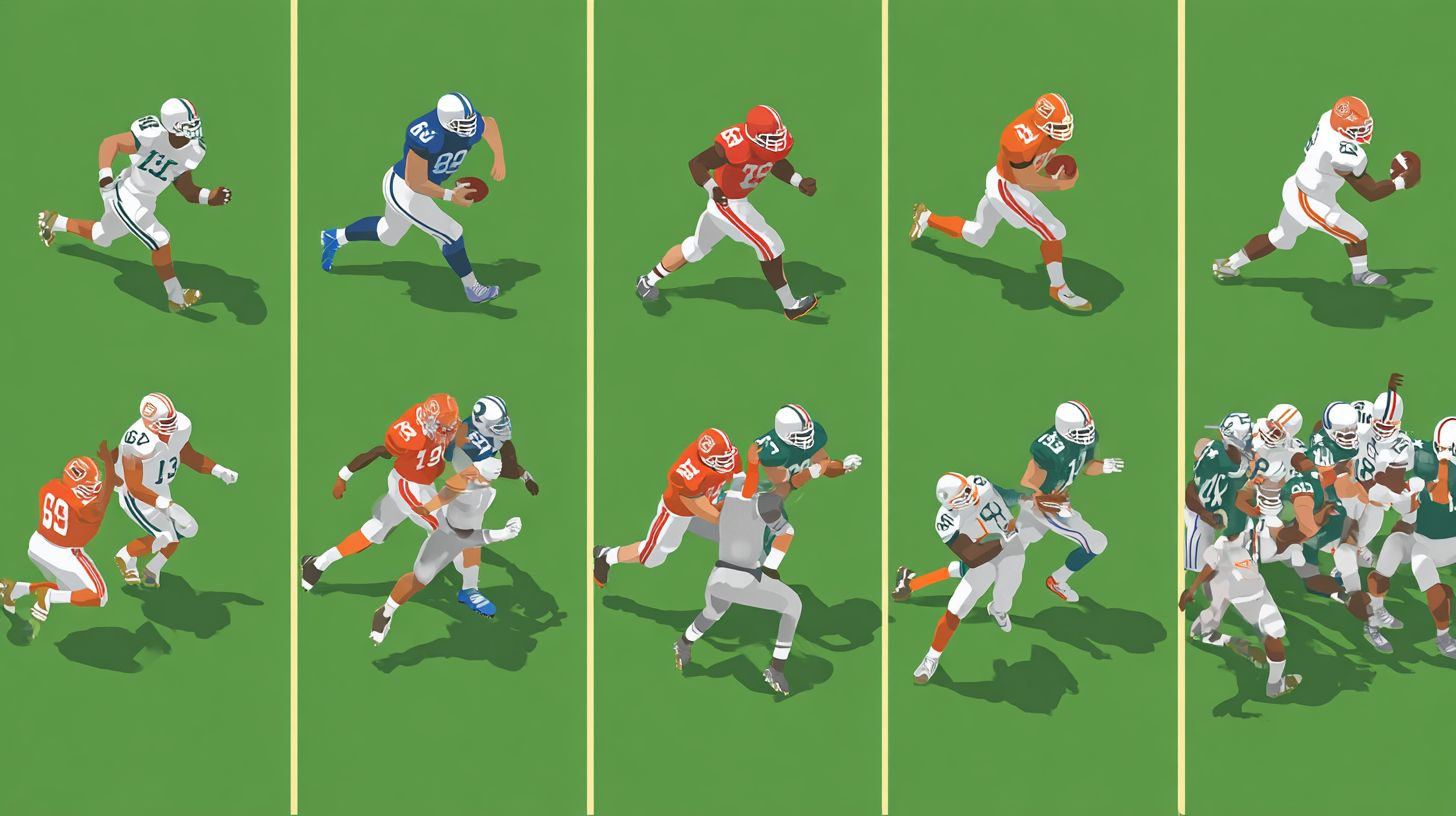
Experience the thrill of how to play american football step by step sport blending strategy, speed, and raw power that captivates millions, from NFL stadiums to backyard fields.
Whether you’re a beginner or sharpening skills, mastering its rules ensures confident play. This step-by-step guide covers essentials like field basics, equipment, positions, rules, play execution, defenses, scoring, game flow, and special teams-unlocking pro-level insights to elevate your game.
Field Dimensions and Markings

The standard American football field measures exactly 120 yards long (100 yards playing field + 10-yard end zones each) by 53 yards wide. This layout gives players clear boundaries for yard lines marked every five yards, with major lines every 10 yards. Goalposts stand with uprights 18 feet 6 inches apart at the crossbar, placed at the back of each end zone.
End zones extend 10 yards deep from the goal line, where teams score touchdowns by crossing with the ball. Hash marks, set 18 feet 6 inches from the sidelines, align the ball for fair snaps and plays. Imagine the field as a giant grid, helping players gauge first down distances during a game.
Yard lines run parallel across the field, numbered from 0 to 50, then back to 0, guiding down and distance calls. The sidelines mark out-of-bounds areas, while the goal line separates the playing field from scoring zones. Referees use these markings to spot penalties like offsides or holding.
NCAA fields match these dimensions, but NFL fields have narrower hash marks for a tighter setup. This affects play calling for quarterbacks and kickers aligning field goals. Beginners learning football rules should visualize the field to understand positions like wide receiver routes from the hashes.
Objective: Scoring Points
The primary objective is to score more points than the opposing team by advancing the ball into the end zone or kicking through the goalposts. Teams aim to control the football field and execute offensive plays effectively. This leads to various scoring opportunities in American football.
Here are the main scoring methods with their point values:
- Touchdown: 6 points, scored by carrying or catching the ball in the end zone.
- Extra Point: 1 point, a short kick after a touchdown.
- Two-Point Conversion: 2 points, a play from scrimmage after a touchdown instead of the kick.
- Field Goal: 3 points, kicking the ball through the goalposts from the field.
- Safety: 2 points, awarded when the defense tackles an offender in their own end zone.
In the NFL 2023 season, teams chose touchdown conversion rates at 55% for two-point attempts versus 45% for extra points. This shows coaches weigh risk based on down and distance. Beginners should practice these in football drills to understand football rules.
Ball control matters greatly, as it limits the opponent’s chances to score. Offensive teams use running plays, passing with the quarterback to wide receivers, and blocking by the offensive line to maintain possession. Defenses counter with tackling, blitzes, and coverage to force punts or turnovers like interceptions.
Teams and Players
Each team fields exactly 11 players on offense, defense, or special teams at one time from a 53-player active roster. This includes 45 active players plus up to 8 on the practice squad. Teams can make unlimited substitutions between plays.
The two-platoon system separates offense and defense into distinct groups. Offensive players focus on scoring through passing and running plays, while defensive players aim to stop the opponent. Special teams handle kicks and punts.
In Super Bowl LVII, the Chiefs had 48 players active, showing how rosters adapt for big games. Substitution rules allow fresh legs without limits during the game. This keeps energy high across quarters.
Understanding football positions helps beginners grasp team setup. For example, the quarterback leads offense, while cornerbacks cover receivers on defense. Practice spotting these roles to follow plays step by step.
Protective Gear
Helmet and shoulder pads are mandatory, providing critical head and upper body protection during impacts. All gear must meet NOCSAE certification requirements to ensure safety standards for American football. Beginners should prioritize properly fitted equipment to avoid injuries while learning football basics.
Other essentials include cleats for traction, mouthpieces to protect teeth, and jerseys for identification. Choose gear based on your football position, like lighter pads for skill roles such as quarterback or wide receiver. Always check sizing charts and try on items for a secure fit before playing.
| Item | Cost | Key Features | Best For | Weight |
|---|---|---|---|---|
| Riddell SpeedFlex helmet | $450 | Carbon steel facemask | QB/WR | 5 lbs |
| Schutt F7 shoulder pads | $250 | Shoulder flaps | Linemen | 6 lbs |
| Under Armour Highlight cleats | $140 | 2-year warranty | Skill positions | 1 lb |
| Nike Vapor mouthpiece | $20 | Boil-and-bite fit | All positions | 0.1 lb |
| Cutler Ridge jersey | $80 | Breathable mesh | All players | 0.5 lb |
Inspect your protective gear before every practice or game for wear and tear. Replace helmets every few seasons or after hard hits, as advised by coaches. Proper gear supports safe tackling, blocking, and play execution in youth football or high school levels.
The Football
Official NFL footballs (Wilson GST) weigh 14-15 ounces with 22 inch long circumferences for proper spiral throws. These specs ensure the ball flies straight and true during deep passes. Players grip the laces for control in American football.
The football measures 11 inches long, with a long circumference of 22 inches and short circumference of 21 inches. Inflate it to 12.5-13.5 PSI for standard play. Proper pressure affects grip and throw accuracy in step by step drills.
Youth footballs run smaller at 10 inches for young hands, while college and pro use the full NFL size. This difference helps beginners in youth football learn to throw spirals safely. Transitioning sizes builds skills for high school football or beyond.
| Level | Length | Long Circumference |
|---|---|---|
| Youth | 10″ | ~20″ |
| College/Pro | 11″ | 22″ |
Grip techniques start with the Wilson Duke replicas at around $50 for practice. Official The Duke costs more at $120 but matches game feel. Place your fingers over the laces, index on the seam for a tight spiral throw.
The Deflategate scandal highlighted rules when balls dropped to 2.0 PSI under inflation. Stick to specs to avoid penalties in play football games. Practice grip football with proper air for real football drills.
Uniform Requirements
Uniforms must display team colors, visible numbers (1-99), and meet league visibility standards for officials. This ensures referees can identify players quickly during fast-paced American football action. Clear uniforms help prevent confusion in down and distance situations or when spotting penalties like offsides.
Numbers follow strict football rules: 1-59 for skill positions like quarterback, running back, and linebacker; 50-79 for the offensive line and defensive line; 80-99 for wide receivers and tight ends. No duplicate numbers on the same side of the ball. These guidelines, outlined in NFL Rule 5, promote fairness and easy identification across high school football, college football, and pro levels.
Popular brands include Nike Vapor Untouchable around $150 and Under Armour options near $120. Choose jerseys with alternate designs allowed under alternate jersey rules, but always verify they match your league’s standards. Pair with shoulder pads, helmet, cleats, and mouthpiece for full football equipment compliance.
For beginners learning to play football step by step, check your league’s uniform policy before games. Practice in full gear to get comfortable with movement during three-point stance or route running. Proper uniforms enhance safety and adherence to football basics like visibility on the football field.
Offensive Positions
The quarterback leads with 500+ pass attempts per season, protected by 5 linemen averaging 315 lbs each. This setup forms the core of offensive positions in American football. Understanding these roles helps beginners grasp how teams score touchdowns and first downs.
Offenses typically run 65% pass plays on average in the NFL, balancing runs and throws. The offensive line blocks defenders to give the quarterback time. Running backs and receivers exploit these gaps for big gains.
Key positions work together in the huddle before each snap. The quarterback calls plays based on down and distance. This coordination drives offensive plays like screen passes or deep passes.
| Position | # Players | Avg Height/Weight | Key Duties | Example Player |
|---|---|---|---|---|
| QB | 1 | 6’3″/225 | Calls plays, throws passes, hands off | Patrick Mahomes |
| RB | 1-2 | 5’11″/215 | Runs with ball, catches short passes, blocks | Christian McCaffrey |
| WR | 2-4 | 6’1″/200 | Runs routes, catches passes, gains yards after catch | Tyreek Hill |
| TE | 1-2 | 6’5″/250 | Blocks, runs routes, catches middle passes | Travis Kelce |
| OL | 5 | 6’5″/315 | Blocks defenders, protects quarterback | Trent Williams |
Quarterbacks like Patrick Mahomes drop back from under center or shotgun formation. They read defenses for audibles before the snap. Practice grip on the pigskin to throw a tight spiral.
Running backs, such as Christian McCaffrey, use footwork for route running and handoffs. Wide receivers run precise patterns like slants or posts to beat man coverage. Tight ends combine blocking with receiving for versatile plays.
The offensive line masters three-point stance for quick blocks. They shed blocks on running plays and prevent sacks on passes. Mastering these football positions is key in this step-by-step guide to playing American football.
Defensive Positions
Defensive line (4 players, avg 305 lbs) pressures quarterback while secondary covers receivers. These big players line up front and center on the football field. They focus on stopping the run and rushing the passer.
In a four-man front, defensive tackles anchor the middle. They use a three-point stance to explode off the line. Their job includes shedding blocks from the offensive line.
| Position | Height/Weight | Key Role | Example Player |
|---|---|---|---|
| DT (2) | 6’3″/310 | Stop run | Chris Jones |
| Edge (2) | 6’4″/265 | Pass rush | Myles Garrett |
| LB (3) | 6’2″/240 | Coverage/run | Fred Warner |
| CB (2) | 6’0″/195 | Man coverage | Sauce Gardner |
| S (2) | 6’1″/210 | Deep safety | Minkah Fitzpatrick |
Linebackers read the offensive plays and fill gaps. They tackle runners and drop into zone coverage. Practice tackling form to wrap up ball carriers safely.
Cornerbacks and safeties form the secondary. Cornerbacks jam receivers at the line in man coverage. Safeties patrol deep zones, preventing big deep passes or touchdowns.
To play these positions well, master football drills like coverage drills and shedding blocks. Understand down and distance to adjust your stance. Watch for the snap and react fast to disrupt plays.
Special Teams
Special teams handle kicks and punts, accounting for 20% of possessions but 40% of scoring plays. These units cover kickoffs, punts, field goals, and extra points. They often decide close games in American football.
Key positions include the kicker (K), punter (P), long snapper, two returners, and six blockers. The long snapper delivers the ball precisely to the holder or punter. Blockers protect against rushing defenders.
Coverage units chase down kicks to pin opponents deep, while return units focus on catching and advancing the ball. For example, players like Justin Tucker excel with high field goal accuracy. Practice fair catch signals to avoid risky returns.
In a kickoff, the coverage team sprints to tackle the returner near the end zone. Returners use speed and blockers to gain yards. Understanding onside kicks helps teams recover the ball unexpectedly.
Downs System
Teams get 4 downs (attempts) to advance 10 yards; failure results in turnover on downs. This core part of American football rules keeps the game moving and forces strategic choices. The offense aims for a first down to reset the count.
On 1st down, the team typically faces 1st and 10 from the line of scrimmage. They might run a running play with the running back or attempt a short passing play to the wide receiver. Success grants a fresh set of four downs.
2nd down shows the remaining distance, like 2nd and 7 after gaining three yards. Coaches adjust with play calling, perhaps using a screen pass or handoff. Building momentum here sets up easier later downs.
3rd down is critical, often 3rd and long such as 3rd and 12. The quarterback may drop back for a deep pass or the offensive line blocks for a key gain. Decisions weigh risk, like attempting a long throw versus a safe run.
On 4th down, teams usually punt to flip field position or try a field goal near the end zone. In 2023, NFL teams converted 4th downs at 62% when going for it, showing growing aggression. Coaches read down and distance for these high-stakes calls, balancing punt coverage risks against conversion rewards.
First Down Measurements
Chain crew measures with 10-yard chains; ball must cross goal line between hash marks for first down. The chain gang consists of officials who stretch a long chain exactly ten yards from the previous spot. This setup confirms if the offense gains enough ground to earn a new set of downs.
Spot rules determine where the referee places the ball after each play. For example, if a runner is tackled near the sideline, the spot is the innermost part of the body touching inbounds. Short-yardage situations, like third-and-one, rely on precise spotting to decide if chains come out.
Replay reviews challenge close first down measurements. Coaches throw a red flag to initiate review, and officials check video from multiple angles. This process ensures accuracy in critical moments, such as a receiver stretching the ball forward on fourth down.
Modern tech like Nike chip in the ball and Next Gen Stats provide precise tracking. A 2022 rule change extended chains to the sideline for better visibility. These tools help officials, chain crew, and fans follow down and distance in real time during American football games.
Penalties Overview
Penalties average 12.5 per NFL game, costing 105 yards per team. These football rules violations disrupt plays and give the opposing team an advantage. Understanding them helps players avoid mistakes during a game.
Referees use specific hand signals to communicate penalties clearly. For example, they signal holding by pulling at their jersey. This quick visual cue keeps everyone on the field informed.
The most-called penalties include holding at about 0.72 per game. Others like offsides and pass interference also appear frequently. Learning these prepares beginners for step-by-step play football.
| Penalty | Yards | Common Player | Example |
|---|---|---|---|
| Holding | 10 | Offensive lineman | Grabbing defender’s jersey during block |
| Offsides | 5 | Defensive lineman | Crossing line of scrimmage before snap |
| Pass Interference | 15+ or spot foul | Cornerback | Defender pushing receiver before pass arrives |
| Roughing Kicker | 15 + first down | Defensive player | Running into kicker after fair kick attempt |
Avoiding holding penalties starts with proper blocking technique in the three-point stance. Practice football drills to keep hands inside the frame. This maintains drive momentum on running plays or pass protection.
Coin Toss
Team captains meet at midfield. The visiting team calls ‘heads’ or ‘tails’ for choice of kickoff or defer. The referee flips the coin to start the game under football rules.
After the flip, the winning captain picks from key options. Choices include receiving the kickoff, kicking off, selecting an end zone, or choosing the goal line. Teams often defer to gain advantage in the second half.
Many captains select to receive first for early momentum or defer for better late-game position. This decision sets the tone for American football strategy. Super Bowl coin toss streaks highlight how teams like the Chiefs have won multiple opens.
Understanding this beginner guide step prepares players for real games. Practice calling decisions in football drills or youth football scrimmages. It affects game plan, play calling, and overall flow from kickoff to overtime rules.
Kickoff Procedure
The kicker tees ball at the 35-yard line in the NFL. The coverage team works to prevent the return past the 25-yard line. This starts every half and after scores.
Setup begins with the tee placement using a standard 1-inch tee for kickoffs. Ten players from the kicking team line up 35-40 yards downfield. The receiving team positions 10 players at the 30-yard line under new 2024 rules, creating a 30-yard buffer.
The kicker aims for a touchback, where the ball goes into the end zone and the offense starts at the 30-yard line. For an onside kick, the ball is placed at the kicking team’s 20-yard line. Kickers often use a squib kick to bounce low and cause fumbles.
Return teams choose between wedge formation for tight blocking or spread formation for speed. The wedge packs blockers together for power, while spread uses wide receivers to isolate defenders. Practice these in kickoff drills to master timing and blocking angles.
The Huddle and Snap
Huddle (15 seconds max) receives play call. The quarterback gathers the offense in a tight circle on the football field. Players listen closely before breaking to their football positions.
Here are the key steps for the huddle and snap in American football.
- The quarterback calls the play in the huddle. He might use an audible to change it based on the defense’s alignment.
- Players line up at the line of scrimmage. Motion is allowed, where a wide receiver or running back shifts position to confuse defenders.
- The quarterback starts the cadence, often saying “Set… Hut!”. This sets the rhythm for the snap.
- The center snaps the ball on the first sound to avoid a false start penalty. The ball goes directly to the quarterback’s hands.
Teams like the Chiefs use no-huddle tempo to speed up the game. This keeps defenses off balance with quick snaps after short huddles or no huddle at all.
Mastering the snap ensures smooth offensive plays. Practice cadence in football drills to build timing between the center, quarterback, and offensive line.
Running Plays
Running plays gain 4.3 yards per carry on NFL average using inside and outside zone blocking schemes. These plays focus on the running back advancing the ball on the ground. The offensive line creates paths through precise blocking.
Common types of running plays include power, counter, zone, and trap schemes. Each varies in blocking angles and timing to exploit defensive alignments. Coaches select based on the football field position and down and distance.
| Running Play Type | Average Yards Per Carry |
|---|---|
| Power | 4.1 ypc |
| Counter | 4.5 ypc |
| Zone | 4.8 ypc |
| Trap | 5.1 ypc |
Blocking rules limit five eligible players in the backfield at the snap. The quarterback hands off to the running back, who follows pulling guards. This setup confuses linebackers and defensive line pursuits.
For examples, the 49ers use outside zone with Christian McCaffrey averaging 5.4 ypc. The Eagles employ the brotherly shove near the goal line, doubling touchdown rates. Practice these in football drills to master footwork and blocking angles.
To execute a running play step by step, the team huddles for the call. The center snaps to the quarterback under the play clock. Linemen engage in three-point stance, driving blocks while the running back reads gaps for a first down.
Passing Plays
QB drops back 3-5 steps, delivering accurate passes in American football. This dropback technique sets up the quarterback to scan the field while staying protected by the offensive line.
In passing plays, the quarterback uses progressions, reading from WR1 to WR2, then WR3, and finally the checkdown option. This step-by-step read helps find the open receiver quickly during the play.
Throw mechanics involve keeping shoulders square to the target and elbow at ear level for power. Proper footwork in the drop ensures a clean release on deep passes or quick slants.
Common routes include the slant for short gains, the post route to stretch the defense deep, and the screen pass to counter aggressive blitzes. Quarterbacks like Patrick Mahomes add flair with sidearm throws to evade pressure.
Practice 7-step drops for longer plays, planting the back foot firmly before stepping into the throw. Mastering these builds timing with wide receivers and tight ends on route running.
- Drop back smoothly from the snap, eyes downfield.
- Read primary receiver first, then progress to backups.
- Grip the football with fingers spread for a tight spiral.
- Follow through high to arc the ball over defenders.
For beginners learning to play football step by step, focus on footwork drills to simulate game pressure. Integrate these into huddles with play calling for realistic reps on the football field.
Tackling Fundamentals
Proper tackling fundamentals help players make safer, more effective stops. Using head-up contact reduces missed tackles while protecting both the tackler and ball carrier. Mastering these basics is key in American football for all positions like linebackers and safeties.
The 6-step tackling technique provides a clear, step-by-step process to execute tackles correctly. Follow these steps during practice and games to build proper form. This method emphasizes control and power.
- Read keys: Watch the ball carrier’s hips and shoulders to predict their path.
- Break downhill: Accelerate straight at the target with short, explosive steps.
- Shoot hips: Explode forward using your hips to generate force, keeping your head up.
- Drive through: Contact with your shoulder pad, pushing your legs to drive the runner backward.
- Wrap arms: Secure the ball carrier by wrapping your arms tightly around their legs or torso.
- Land on player: Stay on top to prevent them from advancing, then roll away safely.
Practice with football drills like angle tackling and open field tackling to refine these steps. Angle tackling works on pursuing at angles across the football field, while open field focuses on one-on-one stops in space. These build confidence for game situations.
The NFL’s Target Rule bans targeting, which means leading with the helmet or launching at the head or neck area. Always prioritize tackling form to avoid penalties like roughing or ejection. Coaches in high school football and college football stress this for player safety.
Pass Coverage
Zone coverage allows underneath throws while man coverage prevents big plays. In American football, defenders use these strategies to stop the quarterback from completing passes. Understanding both helps players execute defensive plays effectively.
Man coverage assigns each defender to cover a specific receiver one-on-one. This approach excels at limiting long gains downfield. Cornerbacks and safeties stick tight to wide receivers or tight ends.
Zone coverage divides the football field into areas where defenders patrol for passes. Players read the quarterback’s eyes and react to the ball. This setup frees up defenders to support runs or short passes.
Teams mix techniques like press coverage to jam receivers at the line or bail techniques with backpedaling. Drills focusing on footwork and route running build these skills for beginners learning pass coverage.
| Strategy | Key Strength | Common Use |
|---|---|---|
| Man Coverage | Prevents big plays (12+ yards) | High-pressure situations against star wide receivers |
| Cover 2 Zone | Handles underneath routes | Balanced defense on obvious passing downs |
- Press technique: Jam the receiver at the line of scrimmage to disrupt timing.
- Bail technique: Backpedal quickly while facing the quarterback.
- Cloud coverage: Outside corner plays deep while inside linebacker covers flats.
- Stem technique: Defender mirrors receiver’s stem to confuse route breaks.
Examples like the 49ers’ Cover 3 scheme rank high for versatility. Chiefs defenses beat man coverage with speed and physicality. Practice these in coverage drills to improve tackling form and shedding blocks during step-by-step football training.
Run Stopping
The front 7 fills gaps using 2-gapping technique, limiting runs to short gains. This approach lets defensive linemen and linebackers control two gaps each. It forces the running back into crowded areas.
Defensive fronts come in two main types: 1-gap and 2-gap. In a 1-gap front, players penetrate one gap to disrupt the offensive line quickly. A 2-gap front emphasizes control, where each defender handles blockers on both sides.
Key techniques help shed blocks during run stopping. The swim move uses an arm-over motion to slip past tackles. Rip and long arm moves drive through or punch blockers away.
Pursuit angles matter for linebackers and safeties. They take direct paths to the ball carrier while staying in zone coverage. This cuts off running plays like sweeps or traps.
Front Types Explained
A 1-gap front focuses on penetration by the defensive line. Players target one specific gap between offensive linemen. This collapses the pocket fast against running backs.
In contrast, 2-gap technique requires defenders to read and react. They anchor against double teams from the offensive line. Linebackers then fill the controlled gaps.
Teams mix these based on the game plan. Against power runs, 2-gapping holds the point of attack. Speedy backs face more 1-gap pressure.
Block Shedding Techniques
The swim move excels in run stopping by whipping one arm over the blocker. Practice this in football drills to build a high shed rate. It works well on reach blocks.
Rip move rips the inside arm under the tackle’s armpit. Combine it with hip explosion for power. Long arm extends the punch to keep separation.
Drill these in three-point stance positions. Focus on hand placement and footwork. This helps defensive linemen stay free to pursue.
| Defender Position | Pursuit Path | Key Angle Tip |
|---|---|---|
| Defensive End | Inside-out to ball | Stay square to line of scrimmage |
| Middle Linebacker | Direct to ball carrier | Avoid over-pursuing sidelines |
| Safety | Deep support angle | Force back to hash marks |
| Cornerback | Outside contain | Run to daylight, not ball |
Use this diagram for pursuit angles in practice. It shows how football positions like ends and safeties coordinate. Proper angles prevent big running plays.
Touchdown
The ball carrier must break the goal line plane with possession for 6 points. This fundamental football rule applies in American football across all levels, from youth football to the NFL. Possession means controlling the ball as it crosses into the end zone.
Touchdowns happen through various plays, like a running back rushing in or a wide receiver catching a pass. The offense scores by getting the ball past the goal line, marked by pylons at each corner of the end zone. Defenders try to stop this with tackling or forcing fumbles.
Key rules include the simultaneous catch, where both feet and the ball touch inbounds together. A toe drag or pylon lean can count if the ball breaks the plane before going out of bounds. Replay reviews often use multiple angles to confirm these close calls.
Iconic examples include Odell Beckham’s one-handed grab and David Tyree’s helmet catch in the Super Bowl. Practice route running and catching drills to master receiving touchdowns. Understanding these steps helps beginners in this step-by-step guide to playing football.
Field Goal and Extra Point
Kickers attempt field goals from an average of 33 yards after touchdowns, often converting at a high rate. These kicks happen during games to score three points, especially when a team is close to the goalposts. Extra points follow touchdowns for one point each.
The holder sets the laces out on the football, just like the famous line ‘Laces out, Danny.’ This ensures the kicker strikes a clean ball. The holder kneels behind the line of scrimmage.
The snap goes 7-8 yards back to the holder for stability. The kicker then takes a 14-16 step approach, focusing on rhythm and power. They strike the low part of the tee for optimal lift and accuracy.
Justin Tucker holds the record with a 66-yard field goal, showing the range possible. Extra point blocks occur at a notable rate, around 8 percent. Practice footwork and timing to master these football basics.
Safety and Two-Point Conversion
Safeties (2 points) occur on tackle in end zone. They also happen when the offense commits certain penalties there. Two-point conversions succeed around 54% of the time, compared to 94% for point-after-touchdown kicks.
A safety scenario arises if the defense tackles the ball carrier in their own end zone. The offense’s 12th man on the field can trigger it too. Intentional grounding by the quarterback in the end zone counts as another way.
Snapping the ball out of the end zone directly leads to a safety. After a safety, the scoring team gets a free kick from the 20-yard line. Teams use this to shift field position in American football games.
For two-point conversions, teams try plays like the power run, fade pass, or rollout. The tush push formation packs the line with blockers around the quarterback. It pushes the ball carrier forward for the two points just beyond the goal line.
- Power run: Offensive line creates a gap for the running back.
- Fade pass: Quarterback targets the wide receiver in the corner.
- Rollout: Quarterback moves left or right to find an open tight end.
In the tush push, the center snaps to the quarterback in shotgun. Fullbacks and linemen drive forward together. This close-quarters tactic suits goal line stands in NFL or college football.
Play Clock Management
The 40-second play clock starts when the referee spots the ball. A 25-second clock applies after the chains move for a first down measurement. The 15-second clock kicks in during the final two minutes of each half after the two-minute warning.
Managing the play clock helps control the game’s pace in American football. Offenses watch the clock to avoid rushing plays. Defenses use it to disrupt the rhythm of opponents.
No-huddle offenses speed up by eating about 85 seconds per play with quick snaps. Hurry-up strategies preserve time at around 22 seconds per play for late-game comebacks. Practice clock management in drills to master these tempos.
Delay of game penalties cost 5 yards and happen often, slowing momentum. Teams signal the quarterback to hurry the snap from the huddle. Good play calling keeps the offense aligned before the clock winds down.
Timeouts and Challenges
Teams get 3 timeouts per half, each lasting 2 minutes. Coaches can challenge calls once per quarter under NFL rules. These tools help manage the game clock and correct referee errors during a match.
Timeout strategy shines in key moments like the 2-minute drill to score quickly or a red zone stop to force a field goal. Save timeouts for late-game situations when trailing. Use them to stop the clock after incomplete passes or runs out of bounds.
The challenge pool gives each team 2 challenges per game plus replay assist. A successful challenge returns the timeout used. Booth reviews focus on scoring plays and turnovers for high accuracy.
- Challenge close calls on first downs or catches to gain extra yards.
- Save challenges for big moments like potential interceptions or fumbles.
- Watch referee signals closely from the sideline to spot reviewable plays.
In youth football or high school games, rules may limit challenges to coach’s discretion. Practice calling timeouts in drills to build team rhythm. Mastering these keeps your football strategy sharp step by step.
Halves and Quarters
American football games consist of 15:00 quarters x4 = 60min game clock, with a 12:00 halftime that often includes team interviews and entertainment. This structure divides play into four quarters, creating two halves separated by the longer halftime break. Understanding these divisions helps beginners follow the flow of a game step by step.
Each quarter features key interruptions like 2-minute warnings in the first and third quarters, signaling a brief pause for strategy talks. Officials stop the game clock on events such as incomplete passes or players going out of bounds. These rules keep the action moving while allowing for huddles, play calling, and adjustments by the quarterback and coach.
Halftime lasts about 13 minutes in professional games, featuring shows and team regrouping in the locker room. College football may use four quarters or a continuous clock to shorten games. Watch for timeouts, challenges, and the play clock winding down to grasp how teams manage down and distance under pressure.
Practical tip for learning: Track quarters during a match by noting yard lines gained toward a first down. This builds familiarity with offensive plays like running plays or deep passes, and defensive plays such as blitzes or zone coverage. Games typically last around three hours total, blending clock time with real-world pauses.
Punt Execution
NFL punters average 46.5 net yards using coffin corner technique. This pins opponents deep in their territory near the inside 5-yard line. Proper execution starts with precise timing from the snap.
The snap to punter comes from 8 yards back, giving the punter time to position. Protection holds against up to 10 rushers max, with the long snapper and holder key to success. Practice this in football drills to build rhythm.
From the snap, the punter takes a 4-step drop for balance. Drop the ball at knee height, then strike with top-half contact using the top of the foot. This creates hang time and distance for fair catch opportunities.
- Snap received cleanly from 8 yards.
- Four quick steps into drop back position.
- Ball drops to knee level for control.
- Contact upper half for optimal spin and flight.
Punters aim for types like normal punt around 45 yards or coffin corner at 38 yards inside the 10. Focus on football strategy to force poor field position. Players like Tommy Townsend show mastery with consistent averages.
Kickoff Returns
Returners average 23.5 yards using wedge blocking schemes with five players. The returner positions himself behind a wall of blockers called wedges. Upbacks provide extra protection against the oncoming coverage team.
In kickoff returns, the receiving team aims to advance the ball as far as possible from their own end zone. Teams form a wedge to create a running lane for the returner. This setup allows the returner to follow blockers through gaps in the coverage.
Football rules prohibit blocking below the waist during returns to ensure player safety. The returner must signal for a fair catch if he cannot advance safely. Coaches teach players to read the kick’s hang time and coverage speed step by step.
New 2024 NFL rules define a landing zone from the 20 to 35-yard line on the receiving side. This change promotes touchbacks, where the ball starts at the 30-yard line if it lands in that zone. Teams practice onside kicks and squib kicks to counter these adjustments in youth football and high school games.
- Returner catches the kickoff near the goal line or end zone.
- Blockers form a wedge using football positions like upbacks and wings.
- Avoid penalties such as holding or illegal blocks.
- Run to daylight, following the lead blocker toward the sideline.
Onside Kicks
Onside kicks recover 18% of attempts using 2024 rule: 20-yard line, 10 players midfield. This special kickoff aims to regain possession quickly for the kicking team. Coaches use it in late-game situations to mount comebacks.
The low-line drive technique sends the ball bouncing forward after crossing the 20-yard line. Kickers angle it low to increase recovery chances by the onside team. New rules prevent the recovery team from touching the ball until it travels 10 yards.
Historical trends show success rates dropped after rule changes, making execution tougher. Teams now focus on precise foot placement and timing. Practice air under the ball for optimal bounce control.
- Position 10 players at midfield for setup.
- Kick a line drive that skims low and forward.
- Time the surge after 10 yards for recovery.
- Use squib kick variations for added unpredictability.
Mastering onside kicks requires drills on footwork and timing. Watch for penalties like offsides during recovery attempts. Integrate into game plans for high-stakes moments in American football.
1. Understanding the Basics
American football is played on a 100-yard field with specific markings that dictate every play, from end zones to hash marks. The full field measures 120 yards long including the two 10-yard end zones at each end, and it is 53 yards wide. Key markings include yard lines every 10 yards, hash marks for precise ball placement, and goalposts at the back of each end zone.
Each team fields 11 players on the field at once, divided into offense, defense, and special teams. The main objective is to outscore the opponent within a 60-minute game, divided into four 15-minute quarters. Teams advance the ball by running or passing to score touchdowns or field goals.
For official details, reference the NFL rulebook, which standardizes these dimensions across professional play. In high school or college football, slight variations may exist, but the core layout remains the same. Understanding these basics helps beginners grasp how plays unfold step by step.
The football field serves as the battlefield where strategy meets execution. Sidelines mark the boundaries, and crossing them puts the ball out of bounds. Goalposts consist of uprights 18.5 feet apart with a crossbar 10 feet high, used for field goals and extra points.
Proper equipment protects players while meeting league requirements from youth to NFL levels.
Every player needs mandatory gear like a helmet, shoulder pads, and mouthpiece to stay safe during American football games. These items absorb impacts and prevent serious injuries. Leagues from youth to NFL enforce strict standards.
Position-specific equipment varies by role, such as extra padding for linemen or lighter gear for wide receivers. All helmets must meet NFL and NOCSAE standards for impact resistance. Check labels for certification before buying.
A total beginner kit typically costs $150-300, covering basics like jersey, cleats, and thigh pads. Start with fitted items to avoid discomfort on the field. Shop at sports stores for quality options.
- Helmet: Protects the head from tackles and falls.
- Shoulder pads: Shields collarbone and ribs during blocks.
- Mouthpiece: Guards teeth and jaw on contact.
- Cleats: Provides traction on grass or turf.
- Jersey and pants: Identifies team and adds light padding.
Recent 2023 NFL innovations, like the Guardian helmet, focus on better protection. Players should prioritize properly fitted football equipment for all drills and games. Inspect gear regularly for wear.
3. Positions and Roles
11 players per side specialize in offense (scoring), defense (stopping), or special teams (kicks). Teams group positions by these core units on the football field. This setup helps players focus on specific skills like blocking, tackling, or route running.
Offense includes the quarterback, running backs, wide receivers, tight ends, and offensive line. Defense features the defensive line, linebackers, cornerbacks, and safeties. Special teams handle punts, kickoffs, and field goals near the end zones and goalposts.
Average NFL salaries reflect demand, with quarterbacks at $30M+ and linemen around $12M. The 2023 Pro Bowl starters highlighted stars like quarterbacks, elite edge rushers, and versatile cornerbacks. Understanding these football positions is key for beginners learning to play football step by step.
Players huddle before each snap to review down and distance, then break to their spots along yard lines or hash marks. Coaches call plays based on these roles, adjusting for first down needs or scoring chances like touchdowns or field goals.
4. Basic Rules and Terminology
Games operate on 4 downs to gain 10 yards, with a 40-second play clock between snaps. On fourth down, teams often punt or attempt a field goal if they cannot convert. The NFL Rulebook 2024 edition outlines these core football rules for American football.
The offensive team must advance the ball 10 yards in four attempts, called downs, to earn a new set of downs. Failure leads to turnover on downs. Players huddle to hear play calling from the quarterback before each snap.
Penalties disrupt plays, with 15-yard infractions like holding or pass interference being common. Referees signal penalties using hand gestures, such as arms crossed for unsportsmanlike conduct. The chain crew measures first downs at the sideline.
Key terms include touchdown for six points in the end zone, field goal for three, and safety score for two. Understand down and distance announcements like “second and five” to follow the game. For a full reference, consult the NFL Rulebook.
Understanding Downs and the Play Clock
In American football, downs give the offense four chances to gain 10 yards from the line of scrimmage. A successful first down resets the count at the new yard line. Watch the play clock to avoid delay of game penalties.
After each play, the 40-second play clock starts, giving time to snap the ball. The quarterback calls plays in the huddle, then signals the center for the snap. Practice timing in football drills to master this rhythm.
On third down, teams decide between a conservative run or risky pass. Fourth down choices include punting to pin the opponent deep or going for it. This football strategy shapes game plans.
Common Penalties and Referee Signals
Holding penalties occur when linemen grab defenders, resulting in 10 or 15 yards. Offensive holding backs up the offense, while defensive versions aid the attack. Referees rotate arms for holding signals.
Offsides and encroachment penalties start plays too soon, moving the ball forward for the offense. Pass interference flags fly for illegal contact on receivers, often 15 yards and an automatic first down. Learn signals like pulling a flag from the belt.
Roughing the kicker protects punters with a 15-yard penalty and first down. False starts by the offense draw five-yard penalties for motion before the snap. Spot these during games to understand flow disruptions.
- Holding: Arms rotated in a circle.
- Offsides: Hands on hips.
- Pass interference: Both hands raised palms out.
- False start: Hands up like a tee.
5. Starting the Game
Games begin with a coin toss determining first possession, followed by kickoff from the 35-yard line. This follows NFL Rule 4 kickoff procedures, where the kicking team starts play by sending the ball toward the receiving team. Captains from each side meet at midfield for the toss.
The winner of the coin toss chooses whether to receive the kickoff or defer to the second half. This decision sets the tone for the American football game, influencing field position early on. Teams often pick based on wind or strategy.
After the kickoff, the receiving team catches the ball and runs toward the opposite end zone. If they cross midfield, they gain a first down. Special teams players, including returners and coverage units, execute this high-energy start.
Reference NFL Rule 4 for details on kickoff formations and touchback rules. A kick into the end zone often results in the ball starting at the 25-yard line. This sequence launches the step by step flow of downs and plays.
6. Offensive Plays Step-by-Step
Offense executes from huddle to snap within 40 seconds, averaging 65 passes vs 35 runs per game. This sequence follows a clear rhythm in American football. Teams break the huddle, line up, and snap the ball before the play clock expires.
In systems like Shanahan or McVay schemes, rooted in Air Coryell principles, offenses mix running plays and passing plays. The quarterback calls the play in the huddle. Players jog to their football positions on the football field.
Key steps include the offensive line setting in a three-point stance. The center snaps the ball to the quarterback. Runners like the running back or receivers such as the wide receiver and tight end react to execute.
- Enter the huddle to hear the play calling.
- Align at the line of scrimmage based on down and distance.
- Snap the ball and block or run routes.
- Aim for a first down, touchdown, or field goal.
6.1 The Huddle and Play Call
The huddle gathers the offense for quick instructions. The quarterback relays the game plan from the coach. This keeps communication clear amid NFL rules or high school football variations.
Play calls specify football positions, like “Blue 42” for a screen pass. Everyone repeats to confirm. Adjust for audibles if the defense shows a blitz.
Break the huddle with “ready, set” cadence. Jog to the hash marks. This sets up the snap efficiently.
6.2 Line Up and Stance
Players reach their spots on the yard lines. The offensive line drops into a three-point stance for power. Receivers set outside, ready for route running.
The running back aligns behind the quarterback. Check the defensive line, linebacker, cornerback, and safety. Motion a wide receiver to reveal man coverage or zone coverage.
Stay balanced for blocking. The center eyes the ball. This prepares for the play clock countdown.
6.3 The Snap and Execution
The center snaps the pigskin on the quarterback’s cadence. The QB can drop back for a deep pass or hand off. Linemen engage in shedding blocks.
For a running play, the back takes the handoff and follows blockers. Passes go to a tight end on a slant or wide receiver on a post. Protect against sack or interception.
Secure the first down or score in the end zones. Watch for holding penalty, offsides, or pass interference. Practice these in football drills.
6.4 Common Offensive Plays
A running play uses the running back for short gains. The draw play fakes a pass first. This counters aggressive defenses.
Passing options include the screen pass for quick yards or Hail Mary pass for long shots. Run a play-action fake to freeze linebackers. Mix with two-point conversion attempts.
- Shotgun formation: QB lines up far back for passes.
- Under center: Sets up runs or quick snaps.
- Spread offense: Stretches the defense wide.
7. Defensive Strategies
Defense aims for 3-and-outs using 4-3 or 3-4 base alignments. These setups help stop offensive plays quickly and regain possession. Teams force punts to keep opponents off the field.
In the 4-3 alignment, four linemen and three linebackers provide balance against runs and passes. The 3-4 defense uses three linemen and four linebackers for more blitz options. Coaches pick based on opponent strengths.
Key tactics include blitzing linebackers or safeties to pressure the quarterback. Man coverage sticks defenders to receivers, while zone coverage guards areas of the field. Mixing these confuses offenses.
Practice tackling form and shedding blocks in drills. Watch film to anticipate plays. Strong defenses turn games with interceptions and sacks.
2023 Defensive Rankings Leaders
The top defensive rankings in 2023 highlighted teams excelling in points allowed and yards per game. Leaders used versatile schemes to dominate. Their success came from disciplined play.
| Team | Key Strength |
|---|---|
| Baltimore Ravens | Run defense |
| Cleveland Browns | Pass rush |
| Kansas City Chiefs | Turnover creation |
| San Francisco 49ers | Blitz packages |
These teams mastered football positions like defensive line, linebacker, cornerback, and safety. They forced first downs and limited touchdowns. Beginners can study their game plans for defensive plays.
Focus on coverage drills and football strategy. Use timeouts wisely during crucial down and distance situations. This builds winning habits in American football.
8. Scoring Plays
Touchdowns account for 58% of points; kickers convert 94% extra points. These stats from the 2023 scoring distribution show how touchdowns dominate American football scoring. Teams aim for the end zones to put six points on the board.
A touchdown happens when the ball carrier crosses the goal line or catches a pass there. The offense then chooses an extra point kick for one point or a two-point conversion play. This keeps defenses on edge during crucial moments.
Field goals offer three points by kicking the ball through the goalposts. Kickers step up on fourth down when close to scoring range. Safeties give two points to the defense for tackling the offense in their own end zone.
Understanding these scoring plays helps beginners follow football rules step by step. Watch for play calling near the end zones. Practice spotting referee signals for touchdowns and field goals in games.
8.1 Touchdowns and Extra Points
The touchdown remains the highest-value score at six points in American football. A player must ground the ball in the end zone with possession. This can come from a running play, pass, or even a kick return.
After scoring, the offense sets up for the extra point from the 15-yard line. The quarterback often hands off to a running back for a two-point conversion instead. Teams weigh risks based on down and distance.
In youth football or flag football, these rules adapt for safety. Focus on route running by wide receivers to reach the end zone. Drills like red zone scrimmages build scoring skills.
Masters of this include legendary quarterbacks calling audibles near the goal line. Timeouts and challenges often decide extra point outcomes. Study NFL rules for pro-level precision.
8.2 Field Goals and Safeties
Field goals provide three points when the kicker boots the ball over the crossbar and between goalposts. This occurs on fourth down inside kicking range, often 40-50 yards out. Holders like punters receive the snap.
Safeties award two points to the defense for downing the offense behind their own goal line. Common causes include botched snaps or failed punts. This rare play flips field position dramatically.
Practice blocking and tackling form to prevent safeties on defense. Kickers train footwork and grip on the pigskin for accuracy. High school football emphasizes these under pressure.
Combine with onside kicks or squib kicks for strategy. Referee signals clarify these scores clearly. This knowledge enhances any beginner guide to playing football.
8.3 Two-Point Conversions and Rare Scores
The two-point conversion risks it all for two points post-touchdown from the two-yard line. Offensive plays like screen passes or quarterback sneaks target success. It’s bolder than the extra point kick.
Rare scores include defensive two-point returns after blocks. Teams chart success rates in game plans. College football rules match NFL for these high-stakes calls.
Defenses use blitz or man coverage to stop them. Linebackers and safeties shed blocks here. Simulate in football drills for better preparation.
Mastering scoring explained ties into overall strategy like halftime adjustments. Overtime rules amplify these decisions. Follow Super Bowl highlights for prime examples.
9. Game Flow and Clock
60-minute games divided into 4x15min quarters with 12-minute halftime. This structure forms the backbone of American football timing. Yet, actual games often last over three hours due to stoppages.
The play clock runs for 40 seconds after each snap, keeping offense moving. Officials stop the game clock for incomplete passes, out-of-bounds plays, or penalties. This creates natural pauses in the action.
Teams get three timeouts per half to regroup in the huddle. Coaches use them for play calling or adjustments. Halftime allows deeper strategy reviews before the second half kickoff.
Understand down and distance markers, announced like “second and five,” to track progress. The chain crew measures first downs at the yard lines. This rhythm builds tension across quarters.
9.1 Starting the Game: Kickoff and Returns
Games begin with a kickoff from the kicking team’s goal line. The receiving team catches and advances toward the end zone. Special teams players focus on coverage and blocking here.
Returners signal for a fair catch to avoid tackles if needed. Onside kicks stay low to recover the ball quickly. These plays set early field position advantages.
After scores like a touchdown or field goal, another kickoff restarts play. Teams practice squib kicks to limit returns. Watch for penalties like kick out of bounds.
Kick coverage units include upbacks and gunners sprinting downfield. Effective returns gain crucial yards on the football field. This opens the offense’s game plan.
9.2 Managing the Play Clock and Downs
Each possession uses four downs to gain 10 yards for a first down. The play clock ticks down from 40 seconds, forcing quick snaps from center. Delays draw delay-of-game penalties.
Teams huddle to hear quarterback calls, then break to line up. On fourth down, options include punting, field goals, or going for it. Down and distance guides these choices.
The snap starts every play, with the offensive line ready in stance. Officials spot the ball at hash marks. Manage the clock by kneeling late in wins.
Practice no-huddle offenses to speed tempo and tire defenses. This controls game flow in high school or NFL rules. Time management wins close matches.
9.3 Clock Stoppages and Timeouts
The game clock stops for incomplete passes, runs out of bounds, or scores. Kneel-downs or spikes also halt it. This gives breathing room during drives.
Each team has three timeouts per half, plus one 30-second timeout. Use them wisely for challenges or to ice the kicker. Unused ones carry no value to overtime.
Coaches call audibles at the line based on defensive looks. Timeouts allow play calling reviews from the sideline. Halftime offers 12 minutes for adjustments.
In the final two minutes of halves, the clock rules tighten. Inbound passes start it immediately on snaps. Masters of this preserve leads or mount comebacks.
9.4 End of Half and Overtime Rules
Quarters end on whistles, with no carryover time. Halftime resets strategies for the second half kickoff. Teams review film quickly during breaks.
Ties trigger overtime, varying by league like NFL or college football. Most start with coin toss for possession from the 25-yard line. Sudden death ends it on scores.
Youth football simplifies overtime for safety. Understand Super Bowl formats for pro excitement. These rules ensure decisive winners.
Track referee signals for clock status. Final plays like Hail Mary passes test clock mastery. This caps the step-by-step flow of play.
10. Special Teams Plays
Special teams flip field position 35 yards average via punts and manage possession. These units handle kicks, punts, and returns in American football. They cover about a quarter of the roster and 20% of the salary cap.
Players specialize in kickoffs, punts, and blocking for returns. Coaches call plays from the sideline using the huddle and play clock. Understanding these keeps you sharp on football rules.
Common plays include the onside kick to regain possession or squib kick to avoid big returns. Practice fair catch signals to stop defenders. This phase often decides close games in NFL rules.
Focus on football positions like punter, kicker, and returner. Drills build timing for snaps and coverage. Mastering special teams boosts your beginner guide to playing football step by step.
10a. Kickoffs and Returns
Kickoffs start each half and after scores like touchdowns or field goals. The kicker boots the ball from the goal line toward the end zone. Receiving team sets up at the 25-yard line under NFL rules.
Returners field the kickoff and sprint upfield with blockers ahead. Use speed and football field awareness near hash marks and sidelines. Avoid going out of bounds to keep possession.
Coverage teams sprint downfield tackling the returner. Watch for fakes on onside kicks near the sideline. This play sets early field position and momentum.
Practice blocking wedges and tackling form in drills. Youth football emphasizes touch rules here. It teaches game plan basics for high school or college levels.
10b. Punts and Punt Returns
Punts occur on fourth down to flip the field when offense stalls. The punter receives the long snap and boots it high from the line of scrimmage. Aim for distance over end zone to pin opponents deep.
Return specialists call for a fair catch if pressured, stopping the play safely. Otherwise, catch at the catch point and follow blockers on designed returns. Gunners rush to down the ball inside the 20-yard line.
Coverage must shed blocks using three-point stance. Penalties like roughing the kicker give huge advantages. This controls down and distance for both teams.
Drills focus on snap timing and drop back for punters. Learn referee signals for fair catches. Essential for football strategy in any league.
10c. Field Goals and Extra Points
After touchdowns, teams attempt extra points from the 15-yard line. The holder sets the snap on the hash marks, and kicker drives it between uprights. Two-point conversions risk it from the 2-yard line near end zones.
Field goals win games on any down, often fourth. Line up with long snapper, holder, and protection blockers. Protect against blitz rushes from the defense.
Kickers practice footwork and tee placement for accuracy. Weather affects trajectory over goalposts. Ties into scoring like safety scores or halftime decisions.
Defenses use man coverage rushes or stunts to block. Review penalties explained such as holding. Key for play calling in overtime rules.
Frequently Asked Questions
How to play American football step by step: What are the basic rules?
The basic rules of how to play American football step by step start with understanding the objective: two teams of 11 players each aim to score points by advancing the ball into the opponent’s end zone. A game is divided into four 15-minute quarters. On offense, you have four downs (attempts) to advance 10 yards; success grants a new set of downs. Key rules include no forward passing after the line of scrimmage except by the quarterback, 10-yard penalties for offsides, and scores via touchdowns (6 points), field goals (3 points), and extras.
How to play American football step by step: What equipment do I need?
To learn how to play American football step by step, essential equipment includes a helmet, shoulder pads, mouthguard, cleats, and athletic tape for protection. Beginners can start with a football, cones for drills, and casual sportswear. Full uniforms with jerseys and pants are standard in organized play to ensure safety during contact.
How to play American football step by step: How do I start a play?
Starting a play in how to play American football step by step involves the snap: the center hikes the ball backward to the quarterback at the line of scrimmage. The offense lines up with at least seven players on the line. The quarterback can then hand off, pass, or run, while the defense aims to stop them within four downs or force a turnover.
How to play American football step by step: What are the main positions?
Key positions when learning how to play American football step by step include quarterback (passes/ directs), running back (runs with ball), wide receiver (catches passes), offensive linemen (block), defensive linemen (rush quarterback), linebackers (tackle/stop runs), and defensive backs (cover receivers). Special teams handle kicks and punts.
How to play American football step by step: How do you score?
Scoring in how to play American football step by step happens primarily via touchdown (ball into end zone, 6 points), followed by extra point kick (1 point) or two-point conversion. Field goals (3 points) from any spot, safeties (2 points) when offense is tackled in their end zone, round out scoring. Games end with the highest score winning.
How to play American football step by step: What are beginner drills?
For beginners following how to play American football step by step, start with drills like stance and start (three-point stance), ball handling (quarterback drops), blocking (hands inside), tackling form (head up, wrap), and route running (cuts and catches). Practice 20-30 minutes daily, progressing from no-contact to scrimmages.