
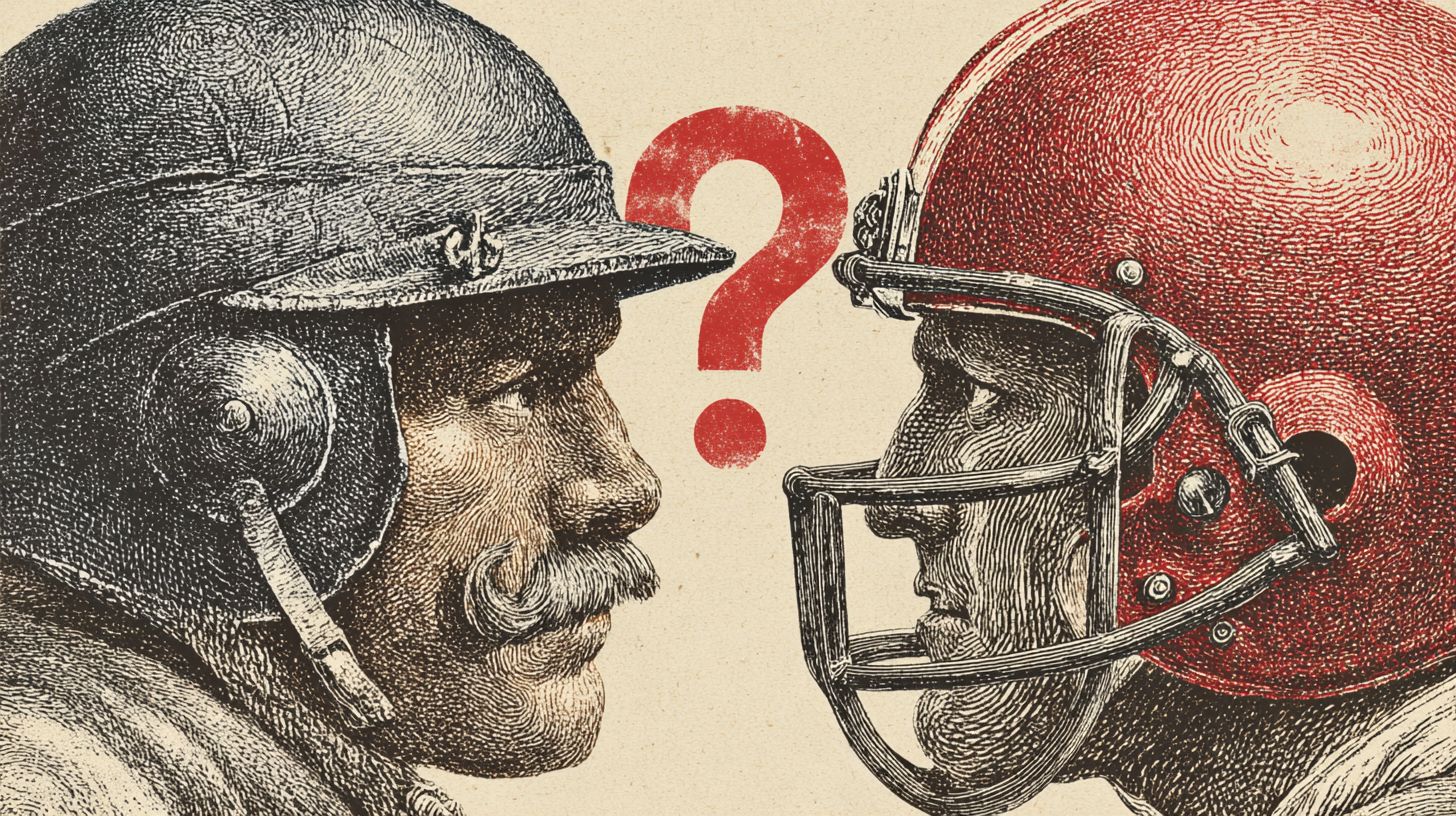
WWhy Is American Football Called Football, tackling spectacle football, while the world reserves that name for soccer?
This naming paradox stems from medieval Europe’s kick-and-carry games, evolving through rugby, colonial imports, and Walter Camp’s gridiron innovations. Discover how early kicking rules, pivotal 1874 matches, and cultural entrenchment preserved the moniker despite radical shifts-unveiling a legacy that defies global logic.
Global Perspective on “Football”

FIFA recognizes football as the global term for soccer, played by 265 million people across 211 member associations (FIFA Big Count 2006, updated 2023). This vast reach highlights why soccer holds the name football worldwide. In contrast, American football stands apart in its naming.
Across the globe, 195 countries call soccer football, while only 5 primarily use soccer. This divide stems from historical roots in association football rules set in 1863 by the London Football Association. The term football ties directly to kicking a spherical ball.
FIFA’s statute Article 2 states: “The game is called football.” This official stance reinforces global terminology. It underscores the name origin linked to foot-based play, unlike American football’s mix of carrying and tackling.
Viewership numbers tell the story further. The 2022 World Cup final drew 3.5 billion viewers, dwarfing the Super Bowl’s 115 million. Such popularity cements football as the world’s game, fueling terminology confusion for international visitors to the United States.
American Football vs. Soccer Terminology
In the US, ‘football’ means gridiron while soccer denotes association football. This reversal often confuses international visitors. The terminology split stems from divergent rules in the 19th century.
American football evolved from rugby with stop-start plays, tackling, and carrying the ball. Soccer, or association football, emphasizes continuous flow and kicking only. These differences highlight why the name ‘football’ fits both yet confuses globally.
| Aspect | American Football | Soccer | Origin |
|---|---|---|---|
| Ball | Prolate spheroid, or pigskin | Spherical | Rugby oval vs. FA spherical rules |
| Scoring | Touchdown (6 points), field goal (3 points) | Goal (1 point) | Gridiron points system vs. simple goal |
| Play Style | Stop-start with downs, forward passes | Continuous flow, no hands | Rugby handling vs. 1863 FA kicking laws |
| Objective | Advance to end zone, tackle opponents | Kick into net, offside rules | Harvard-Yale rugby vs. Cambridge rules |
| Officials | Referees, line judges for yard lines | Referee, assistants for fouls | Gridiron field markings vs. pitch lines |
This table shows core terminology contrasts. American football’s touchdown rewards carrying over the goal line. Soccer’s goal demands precise kicking past defenders.
Understanding these helps explain the name controversy. Both sports use feet historically, but America’s version prioritizes running and passing. Global fans note soccer’s pure kicking game versus gridiron’s full-contact style.
Thesis: Evolution from Shared Roots
American football retains ‘football’ because it evolved directly from 1874 rugby-style games, diverging from soccer’s kicking-only rules established in 1863.
This name origin traces back to shared British roots. Early games involved kicking and handling a ball with the feet, leading to the broad term foot ball in Old English traditions.
The sport’s terminology evolution began with medieval mob football, refined in public schools like Eton and Harrow. These games split into kicking-focused association football and handling-based rugby.
Key timeline markers highlight the path: 1823 Rugby formalized handling rules, 1863 FA set soccer’s no-handling laws, 1874 Princeton-Rutgers match blended styles, and 1880 Walter Camp introduced American innovations like the line of scrimmage.
American football kept the football label due to its rugby heritage, featuring carrying, tackling, and an oval ball unlike soccer’s spherical one.
This divergence created gridiron football, with yard lines, end zones, and plays like the touchdown or field goal.
Follow this article roadmap to explore the full history:
- Rugby Roots and Early American Games covers colonial influences and McGill-Harvard matches.
- Association Football vs. Rugby Rules details the 1863 split and kicking game limits.
- Princeton-Rutgers and Walter Camp Era examines 1874 games, rule changes, and positions like quarterback.
- Modern Naming and Global Confusion discusses NFL terms, Super Bowl, and why not gridiron everywhere.
These sections reveal why American football sticks with its unique name amid international terminology debates.
Origins of the Word “Football”
The word ‘football’ first appears in 1409 English literature, referring to violent mob games banned by King Edward II in 1314, as noted in the Oxford English Dictionary. These early games involved kicking inflated animal bladders across fields or villages. They set the stage for the sport naming we know today.
From medieval kicking games, football evolved through public school codes in the 1800s. This path led to distinct branches like association football (soccer) and rugby, influencing American football’s unique name. Codified rules separated kicking from carrying the ball.
Key milestones trace this terminology evolution. A timeline from 1300 to 1863 highlights bans, school rules, and associations. It shows how foot ball became gridiron in the United States.
| Year | Event |
|---|---|
| 1300s | Mob football games banned |
| 1409 | First written use of ‘football’ |
| 1815 | Eton kicking rules |
| 1823 | Rugby handling allowed |
| 1848 | Cambridge Rules synthesis |
| 1863 | FA rules formed |
Etymology in Medieval Europe
Old English ‘ftbl’ (c. 1400) described inflated animal bladders kicked through villages, as documented in 1314 London proclamation banning the violent game. The term combined foot for kicking and ball for the pigskin-like object. This linguistic roots shaped modern terms.
By 1486, a Cambridge University record mentioned football explicitly. A 1591 Charterhouse School reference quoted players using the term for their matches. These show the word’s spread in education.
European parallels include French jeu de pied and Italian calcio, both emphasizing foot use. Unlike later handling sports, these focused on kicking. This etymology tree branches from Old English to global sport naming.
Early Kick-Based Games
Mob football matches during Shrovetide involved entire villages kicking inflated pigs’ bladders toward rival parish goals, sometimes lasting days with hundreds injured. These chaotic events lacked fixed rules. They centered on community rivalry.
In 1170, a match pitted London against Westminster with 300 players on each side. Goals spanned miles, and play turned violent. Such games built the kicking game tradition.
- 1600s Derby Shrovetide featured goals three miles apart across town.
- Ashbourne Royal Shrovetide continues today as a three-day event with similar mob rules.
- Villages used hugby tactics to advance the ball.
Historical illustrations depict crowds chasing the inflated bladder. These games influenced public school sports and American sport roots. They explain why football stressed foot action.
Evolution to Ball-Handling Sports
19th-century English public schools transformed chaotic mob football into structured games, with Rugby School in 1823 first allowing carrying. This shift introduced handling alongside kicking. Schools codified their versions.
Different codes emerged, balancing tackling and play styles. Eton stuck to kicking, while Rugby permitted runs. These laid groundwork for association football and rugby union.
| School | Year | Key Feature | Kicking/Carrying |
|---|---|---|---|
| Eton | 1815 | Kicking only, no handling | Kicking |
| Rugby | 1823 | Handling allowed | Both |
| Harrow | 1820s | Side handling permitted | Both |
| Winchester | 1830s | Structured kicking | Kicking |
| Cambridge | 1848 | Rules synthesis | Both |
This table shows the path to American divergence. Later, U.S. games added forward passes and downs, keeping the football name despite running game emphasis.
3. Pre-American Football: Rugby and Association Football
The 1863 split between rugby, which allowed handling, and association football, focused on kicking only, created the fork from which American football evolved. This British codification provided the blueprint for modern sports. All American football descends from the rugby branch.
Three pivotal developments shaped this path. First, Rugby School’s 1823 rules introduced handling. Second, the 1848 Cambridge Rules highlighted growing divides. Third, the 1863 formation of The Football Association solidified soccer’s kicking focus.
These events set the stage for American divergence. Early U.S. games blended rugby carrying with local tweaks like the forward pass. Understanding this history explains why American football kept the name football despite its tackling and running emphasis.
British public schools turned chaotic mob football into structured play. Rugby permitted the pigskin to be carried, influencing gridiron positions like quarterback and halfback. Association rules banned handling, birthing global soccer terminology.
Rugby School Codification (1823)
William Webb Ellis’s legendary 1823 act of picking up the ball at Rugby School crystallized the handling code that American football adopted. A plaque at the school commemorates this moment with the words, “A boy named Webb Ellis… caught up the ball and ran with it.” This shift from kicking defined rugby’s path.
Earlier mob football had few limits, with tripping and mass scrums common. The 1823 Rugby features established goal lines, rudimentary offside rules, permitted handling, and banned tripping, though later fully prohibited. These changes made play safer and more tactical.
- Goal lines marked clear scoring zones, unlike vague mob goals.
- Offside rules prevented constant interference.
- Handling allowed running plays, key to touchdown evolution.
- No tripping aimed to reduce injuries from chaotic falls.
This codification influenced Walter Camp’s rules development. American teams adopted the oval ball for carrying, setting apart gridiron from soccer’s spherical ball. Ellis’s plaque photo captures the site’s enduring legacy.
Cambridge Rules and Splitting Paths
The 1848 Cambridge Rules synthesized codes from seven schools but could not resolve handling versus kicking, leading to the 1863 schism. Attendees from 21 schools debated at Trinity College. These rules banned hacking, or shin-kicking, unlike Rugby’s permission.
Cambridge emphasized continuous play and offside restrictions. Rugby allowed rougher tactics for ball control. This table compares key aspects:
| Aspect | Cambridge Rules | Rugby |
|---|---|---|
| Handling | Limited or banned | Permitted freely |
| Hacking | Prohibited | Allowed |
| Offside | Strict enforcement | More lenient |
| Tripping | Banned | Initially allowed |
Excerpts show divides: Cambridge stated, “No player may hack another.” Rugby countered with tolerance for physicality. These paths previewed American football’s rugby roots in tackling and running game.
The meeting fueled rules development. U.S. colleges like Harvard later played under similar handling codes against McGill University. This split explains terminology evolution, with gridiron emerging for the U.S. variant.
Formation of The Football Association (1863)
On October 26, 1863, 11 clubs formed The Football Association at Freemasons’ Tavern in London, banning handling within 20 yards of goal, marking the birth of modern soccer. Ebenezer Cobb Morley chaired, minuting, “No tripping, no hacking, no handling except by goalkeeper.” This created association football rules.
The vote saw 11 for, 4 against full bans, prioritizing kicking. The first FA rules document outlined field markings, goal posts, and referees. It prohibited carrying, enforcing continuous play.
- Handling banned outside goal area.
- Offside rule refined for fair chases.
- Teams of 11 players standardized.
- No forward pass, unlike later gridiron.
This separated soccer from rugby union. American football diverged further with mass plays and the down system. The FA’s image of early rules shows leather ball and yard lines influences on NCAA and NFL fields.
4. American Football’s Colonial Beginnings
American football evolved from British public school games imported by elite colleges, initially played under rugby rules. Colonial elites enjoyed kicking games that echoed medieval pastimes. These early forms laid the groundwork for the sport’s unique name and style in the United States.
After the Civil War, colleges began codifying the rules to organize chaotic play into structured matches. This shift turned rough kicking and carrying games into intercollegiate competitions. The name football stuck, reflecting its roots in foot-based action despite later changes.
Three key phases mark this evolution: first, imported games from Britain brought rugby-style play to Harvard and others. Next, the Harvard-Yale rivalry in the 1870s tested modified rules. Finally, mob football influences added a wild, violent edge from colonial traditions.
These phases highlight how American football diverged from soccer and rugby. Kicking remained central early on, justifying the football label amid tackling and running. This colonial foundation shaped gridiron terminology still used today.
Imported Games from Britain
Harvard students learned rugby-style football during 1860s European tours, importing the game that evolved into American football. The 1860 Harvard crew team played English football abroad, sparking interest back home. This exchange introduced handling the ball alongside kicking.
In 1869, Princeton organized the first college game under similar rules. Harvard’s 1871 catalog noted, ‘Association football and Rugby football both played.’ These imports blended association football kicking with rugby carrying, confusing later terminology.
British public schools like Eton and Harrow influenced the migration. Games traveled from Britain to U.S. colleges via students and tours. This path traces the name origin to Old English foot ball traditions.
Early play featured oval balls for gripping, unlike soccer’s spherical ball. Colleges adapted rules, setting the stage for gridiron divergence. The football moniker persisted through this British influence.
Harvard vs. Yale Early Matches (1870s)
The 1875 Harvard-Yale game, with Yale winning 3-0, under modified rugby rules established intercollegiate football rivalry. Held November 20 in New Haven, it drew about 100 spectators. Players used Harvard Rules, banning forward passing but allowing rugby scrums.
The match saw rough tackling and a broken collarbone injury, highlighting the sport’s physicality. No forward pass meant running and kicking dominated. This game previewed touchdown and field goal precursors.
Teams lined up in kicking formations, with oval balls for carrying. Photos from 1875 show players in wool uniforms, no helmets. Such matches fueled college football growth and rivalry traditions.
Rules emphasized bounce kicking and scrummages, linking to rugby union. Yale pushed for changes, influencing Walter Camp later. The football name endured amid these early gridiron battles.
Mob Football Influences in America
Pre-college football included violent mob football variants like Washington’s Birthday Ball in 1825 at Princeton. Up to 250 players chased a ball toward goals two miles apart. Contemporary accounts described chaos, injuries, and occasional deaths.
In 1860, Amherst students played snow football, a massive scrum in deep snow. This echoed British Shrovetide games with unlimited players and few rules. Kicking and tackling mixed freely, far from organized soccer.
Princeton’s game featured ‘a leather ball stuffed with wind,’ tossed or kicked wildly. Injuries from trampling were common, as one observer noted broken bones and bruises. These events influenced early American sport roughness.
Unlike refined public school sports, mob variants added brute force to football’s etymology. They contributed to tackling and carrying emphases. This colonial wildness shaped the sport before codification.
5. The Pivotal 1874 Princeton-Rutgers Game
The November 6, 1874 Rutgers-Princeton game under soccer rules marked America’s first intercollegiate football match. This event set the stage for American football evolution from British roots. Teams drew from association football traditions with emerging rugby influences.
The match took place on a vast field in New Brunswick, New Jersey. About 100 spectators watched under clear skies at 45 degreesF. It highlighted kicking as the core skill, tying directly to the football name origin.
Princeton pushed strategic plays while Rutgers countered fiercely. The game ended in a 6-6 tie, fueling rivalries. This contest bridged soccer and future gridiron changes like carrying and tackling.
Its significance lies in codifying intercollegiate play. It influenced rules development by Walter Camp later. The event preserved kicking game dominance, explaining why it stayed called football.
Rules of the First Intercollegiate Match
Rutgers-Princeton played under modified 1863 FA soccer rules: 25 players/side, no handling except goalkeeper, goals scored by kicking. The field spanned 400×200 yards, far larger than modern pitches. Goals used trees 250 yards apart as posts.
A New York Herald report noted, “The ball was kicked with precision, adhering strictly to association laws.” No forward passing or tackling occurred. Continuous play emphasized footwork over physical contact.
| Rule | Description | Modern Equivalent |
|---|---|---|
| Field Size | 400 yards long by 200 yards wide | 100 yards long by 53 yards wide in NCAA |
| Ball Type | Round soccer ball | Oval prolate spheroid pigskin |
| Team Size | 25 players per side | 11 players per side |
| Scoring | Kick between trees | Field goal through goal posts |
| Handling | Only goalkeeper allowed | Carrying and forward pass allowed |
These rules reflected British influence from London Football Association. Offside rules limited forward positioning. The setup ensured kicking dominance in early American football history.
Kicking Emphasis in Early Play
Both teams scored 6 goals each (2-0 halftime), confirming the game retained football name due to kicking dominance. Princeton’s strategy focused on long kicks and positioning. Rutgers pushed back with aggressive footwork near goals.
Play-by-play accounts describe continuous kicking rallies. Spectators cheered precise crosses and volleys. No running with the ball occurred, unlike later running game elements.
Original scorecards showed tallies like “Rutgers goal at 23 minutes via corner kick.” Weather aided fluid play on the open field. This match previewed terminology evolution from soccer to gridiron.
The tie score spurred annual rematches. It embedded kicking as central to sport naming. Attendance grew rivalries in college football circles.
Why It Was Called “Football”
Players called it football following British precedent, kicking remained primary scoring method despite emerging handling. A Rutgers student diary entry read, “We played football all afternoon, true to the old style.” This echoed Old English foot ball roots from medieval games.
Contrast with the 1876 Yale-Princeton game adopting rugby rules, which allowed carrying. Yet the 1874 match preserved naming continuity. Kicking goals mirrored association football, not yet gridiron.
Contemporary reports in papers reinforced sport naming traditions. No one questioned the term amid soccer-like play. It established football as the label for America’s evolving sport.
This continuity influenced NCAA and NFL terminology. Even with later additions like touchdown and forward pass, the name stuck. The game cemented historical context for why American football is called football.
6. Walter Camp and the Americanization
Walter Camp’s 1880-1925 rule changes transformed rugby into distinct American football while retaining the ‘football’ name. Known as the Father of American Football, Camp introduced 11 key innovations that shaped the sport’s unique identity. These reforms emphasized strategy, blocking, and territorial gains over rugby’s continuous play.
Camp’s work began in the 1880s at Yale, where he served on rules committees. He reduced chaos from rugby scrums and mass formations. His changes created positions like quarterback and the line of scrimmage, paving the way for modern tactics.
A timeline of Camp’s reforms highlights this evolution: 1880 saw the 11-man team; 1881 introduced downs; 1882 added scrimmage; later years brought snapping and limited substitutions. These steps distanced the game from rugby rules used in early Harvard-Yale games. The name ‘football’ stuck due to its roots in kicking and carrying the oval ball.
Camp’s innovations fostered college football growth, leading to NCAA oversight and professional leagues like the NFL. Fans embraced terms like touchdown and field goal. This Americanization preserved ‘football’ amid global confusion with soccer, or association football.
Camp’s Rule Changes (1880s)
In 1880, Camp reduced players from 15 to 11-man teams; 1882 introduced the scrimmage system replacing rugby scrum; 1888 added snapping the ball from center. These moves created structure in American football. Earlier, 1881 brought the downs system to limit plays.
- 1880: 11 players per side ended oversized rugby mobs, speeding play.
- 1881: Downs system required advancing 10 yards in four attempts or losing possession.
- 1882: Line of scrimmage replaced scrums, allowing organized restarts.
- 1883: Limited tackling below the waist reduced injuries.
- 1888: Snapback from center to quarterback enabled precise plays.
- 1894: Two-point safety rule balanced scoring.
- 1906: Forward pass legalized, revolutionizing offense.
Camp’s 1891 rulebook preface stated, “The game should combine the best elements of kicking game and running game.” This vision integrated rugby influence with American flair. Positions like halfback and tackle emerged from these rules.
These changes spurred intercollegiate football rivalries, such as Ivy League clashes. Coaches developed playbooks and huddles. The reforms addressed dangers like flying wedge formations, promoting safer, strategic gridiron football.
Shift to “Gridiron” but Retaining “Football”
Gridiron nickname emerged 1890s from field markings, but ‘football’ persisted in official rules and popular usage. The term first appeared in a 1890 Harper’s Weekly article describing yard lines. Newspapers favored ‘football’ overwhelmingly through 1920.
The 1902 Spalding Rule Book titled itself Official Football Guide, reinforcing the name. Field markings like yard lines and end zones evoked a gridiron cooking grate. Yet, official bodies like athletic associations kept ‘football’ for its historical ties to British sports.
This duality caused terminology confusion for international visitors mistaking it for soccer. American fans used ‘gridiron’ in slang, but media stuck with football in broadcasts and headlines. Terms like pigskin moniker honored the leather ball’s origins.
Retaining ‘football’ aided marketing in the United States, distinguishing it from rugby union. Leagues like NFL and college bowls embraced it. The name endured despite evolutions in helmets, cleats, and rules like extra point kicks.
7. Key Rule Evolutions Retaining the Name
Even as kicking dominance declined from 70% of scores in the 1880s to 15% in the 1920s, the football name persisted through tradition. Radical changes transformed the sport, yet naming continuity held firm. This section previews three key transformations that maintained the nomenclature despite shifts from kicking to carrying and passing.
Major rule evolutions opened up the running game and introduced the forward pass. These adaptations saved the sport from its deadly past while keeping its core identity. Tradition and institutional habits ensured the name stuck amid the gridiron evolution.
From mass plays to the line of scrimmage, innovators like Walter Camp shaped American football. Each change emphasized tackling, carrying the pigskin, and strategic plays over pure kicking. The persistence highlights how sport naming resists even dramatic rule shifts.
These developments set precedents for NCAA and NFL rules. College football and professional leagues retained the term through shared history. The name’s endurance reflects deep roots in rugby and early American divergence.
Legalization of Forward Pass (1906)
1906 forward pass legalization, with a 20-yard limit behind the line of scrimmage, revolutionized scoring but didn’t change the sport’s name. Pre-1906 mass plays like the flying wedge killed 18 players in 1905 alone. President Theodore Roosevelt pushed for reforms to save college football.
The new rule stated: “A player may hand the ball forward to another player behind the line of scrimmage, not more than twenty yards.” This opened the passing game, shifting focus from brutal runs. Vanderbilt completed the first legal pass against Sewanee that year.
Passing yards grew as a key part of offense, balancing the kicking and running elements. Teams adapted with new positions like quarterback and end. Yet the name American football stayed, tied to its foot-using origins and tradition.
This change established the modern game, with down systems and snaps. It reduced deaths and increased excitement through aerial attacks. Institutional continuity in rulebooks preserved the familiar terminology.
Decline of Kicking Dominance
Field goals dropped from 45% of scoring in 1890-1900 to 12% in 1920-1930 as running and passing rose. Early games relied on kicking through goal posts from long range. Teams like 1899 Yale scored mostly via field goals in the kicking era.
By 1925, Notre Dame emphasized touchdowns and runs for 70% of points. Coach Knute Rockne noted, “The kicking era ended.” Rule tweaks favored carrying the oval ball over constant punts and placements.
This shift boosted the running game with blocking allowed and mass formations phased out. Extra points remained, but field goals became rarer. The sport evolved into gridiron battles of tackling and yard gains.
Scoring trends reflected broader changes, like the down system limiting snaps. Kicking persisted in punts and kickoffs, justifying the name. Tradition overrode the decline, linking to soccer and rugby roots.
Persistence of “Football” Despite Changes
Rulemakers retained football through the 1920s Intercollegiate Rules Committee, establishing naming precedent. 1921 rulebooks kept the same titles as earlier editions. Walter Camp’s columns in Collier’s magazine consistently called it football.
Institutional continuity bridged eras, from Harvard-Yale games to Big Ten rivalries. Leagues like the early NFL adopted the name without debate. This avoided confusion with soccer, known as association football.
Despite forward passes and reduced kicking, the term evoked handling the pigskin with feet in origins. Public school sports and colonial influences reinforced it. Media and fans perpetuated the nomenclature in playbooks and huddles.
The name’s stickiness shows terminology evolution lags behind rule changes. From leather helmets to plastic, gear advanced, but the label endured. It underscores American football’s unique path from British roots.
8. Comparison with Soccer’s Naming
Soccer’s ‘association football’ ‘soccer’ path diverged from American football’s naming trajectory post-1863. While both sports share roots in British foot ball games, their terminology evolved differently due to rule splits and regional preferences. American football retained the broad football label amid its rugby influences.
The table below highlights key differences in sport naming evolution. It contrasts origins, abbreviations, and global usage for clarity.
| Aspect | American Football | Soccer |
|---|---|---|
| Name Origin | 1869 intercollegiate games, rugby-style rules | 1863 FA laws, ‘association football’ |
| Key Abbreviation | Football (gridiron common slang) | Soccer from ‘assoc’ + ‘-er’ (1890s Oxford) |
| Primary Term in US | Football (NFL, NCAA) | Soccer (to avoid confusion) |
| Global Usage | Football in US/Canada; elsewhere gridiron | Football worldwide; soccer in US/Australia |
| Influences | Rugby union, Harvard-Yale, Walter Camp | FA rules, FIFA, British Empire spread |
This side-by-side view shows how terminology evolution reflected rule changes like the forward pass in American football versus soccer’s kicking focus. Cultural naming in the United States prioritized carrying and tackling traditions over spherical ball play.
Experts note that such divergences highlight name controversy for international visitors, yet both terms trace to Old English foot ball with feet and ball.
FIFA and “Association Football”
FIFA’s 1904 formation adopted FA’s ‘association football’ to distinguish from rugby union. This preserved the full name in its statutes amid global expansion. The term emphasized no-handling rules from 1863 laws.
The British Empire spread association football worldwide through colonies and trade. FIFA codified it as the premier kicking game with continuous play and offside rules. Professional leagues adopted this to separate from rugby’s tackling.
The 1905 IFAB laws state: “These laws relate to the game of Association Football, sometimes called Soccer or Rugby Football.” This quote reflects early flexibility in terminology. It helped standardize global terminology for World Cup events.
Today, FIFA upholds association football in official documents, bridging linguistic roots to modern soccer. This contrasts American retention of football for its gridiron variant.
Why Europe Calls It Soccer
Oxford University students coined ‘soccer’ c.1895 from ‘assoc’ abbreviation + ‘-er’ suffix (rugger/lacrosse). This slang emerged in 1892 as the first recorded use. By 1900, it gained traction in England among public school sports circles.
The 1897 Century Dictionary defines it as: “Soccer: Association football; so called from the initials ‘Assoc’ with the common English suffix -er.” This entry shows growing acceptance. Europe used it casually before football dominated post-1920s.
In the 1920s, America adopted soccer exclusively to differentiate from its football. Timeline shifts marked sport codification eras, with soccer aligning to FA rules like Eton and Cambridge variants. Europe phased out soccer as football became universal.
Practical examples include British fans calling it football for Premier League matches, while US media uses soccer for MLS. This terminology confusion stems from Oxford’s playful naming tradition.
American Retention of “Football”
US isolation from soccer terminology post-1880s, plus rugby heritage, cemented ‘football’ usage. The 1894 Spalding Guide survey found nearly all colleges using football for intercollegiate contests. No real soccer competition existed until the 1910s.
Early games like the 1874 Harvard-McGill match blended rugby rules with kicking, favoring the football name. Walter Camp’s innovations, such as the line of scrimmage and down system, distanced it further from association play. College football thrived in Ivy League and Big Ten.
By NFL formation, American football meant gridiron with forward passes and touchdowns. Isolation preserved the term amid rule changes like blocking and mass plays. Fans embraced pigskin moniker for the oval ball.
This retention avoids name controversy domestically, though it puzzles international visitors at Super Bowl events. It reflects unique American sport evolution from colonial influences.
9. Professional Era and Name Solidification
The NFL formation in 1920 and the TV boom in 1958 entrenched ‘football’ as America’s sport name. Professional leagues built on college traditions, popularizing the term nationwide. This era marked the shift from regional play to a national spectacle.
Teams adopted the same naming conventions from NCAA games, calling their sport football without debate. Broadcasters and fans reinforced this through radio and early television. The professional game solidified the identity amid growing crowds.
Key developments like the forward pass and touchdown celebrations stayed tied to the football label. Leagues focused on marketing the name to distinguish from soccer. This institutionalization previewed milestones in organization, media, and culture.
From Canton meetings to Super Bowl hype, pros turned gridiron football into a cultural staple. The name stuck as the sport evolved with tackling rules and field goals. Institutional steps through leagues locked in the terminology.
Formation of NFL (1920)
September 17, 1920: Canton, Ohio meeting forms American Professional Football Association (NFL 1922). Fourteen teams paid a $100 fee to join, with George Halas and Jim Thorpe present. This gathering birthed organized pro football.
The first season featured 22 games across makeshift fields, using official documents that called it football. Players carried the pigskin under rugby-influenced rules, emphasizing running and kicking. The name echoed college playbooks and huddles.
Halas pushed for structure, introducing positions like quarterback and end. Thorpe’s star power drew fans familiar with gridiron terminology. Early leagues debated snaps but kept the football moniker from Walter Camp’s era.
By renaming to NFL, pros cemented the term in contracts and tickets. This foundation spread professional football naming nationwide, blending with high school traditions. The sport’s codification ensured lasting lexicon.
Marketing as “Football” Nationally
1958 NFL Championship (‘Greatest Game Ever’) on NBC drew massive viewers, solidifying football branding. Earlier, a 1939 NFL game aired on CBS, marking TV’s entry. Broadcasters like Red Grange called it football on radio waves.
Chris Schenkel narrated AFL contests, tying the name to forward pass thrills and touchdowns. The 1966 AFL-NFL merger amplified national ads using football slogans. Networks promoted gridiron action over soccer comparisons.
TV highlighted Monday Night Football previews and extra point drama, embedding the term in homes. Marketers avoided gridiron labels to keep it simple for fans. This media push made football synonymous with American sport.
From leather helmets to cleats, broadcasts showcased pigskin moniker in play-by-play. Leagues trademarked terms like Super Bowl, reinforcing football over alternatives. National reach locked in the name’s dominance.
Cultural Entrenchment in US Lexicon
By 1970, Monday Night Football debuted, embedding the name in weekly rituals. High school stadiums dotted towns, with Friday lights under football banners. Slang like pigskin and gridiron became everyday talk.
Fans chanted for touchdowns at Rose Bowl-style events, tying the term to community pride. Coaching lingo from playbooks spread through audibles and huddles. The Super Bowl trademarked football in pop culture.
Media influence turned gridiron football into lexicon staples, distinct from soccer’s spherical ball. International visitors noted the kicking and carrying mix under the football name. Slang evolved with jockstraps and plastic helmets.
From Ivy League origins to Big Ten rivalries, the term endured rule changes like line of scrimmage. Cultural markers like field goal celebrations sealed it. America’s unique naming stuck through generations.
10. Linguistic and Cultural Reasons for the Name
Linguistic precedent and cultural isolation preserved the name ‘football’ for American football despite its mechanical divergence from kicking-based games. Beyond the sport’s mechanics of carrying and tackling, language roots and societal factors shaped its name origin. These elements explain why the United States calls its gridiron game football.
Three key factors reinforce this: the global use of ‘foot’ in ball game names, America’s separation from soccer terminology, and media reinforcement of the term. First, many languages worldwide tie ball sports to the foot. This tradition carried over to early American games influenced by rugby and association football.
Second, pre-WWII sports culture in the US focused on college football and the NFL, sidelining soccer. Immigration patterns and local traditions delayed soccer’s rise. Third, pop culture from broadcasts to movies cemented ‘football’ as the name for the American sport.
These linguistic and cultural threads highlight the terminology evolution unique to the United States. They show how historical context and sport evolution preserved the name amid rule changes like the forward pass and down system.
“Foot” in Ball Games Worldwide
Over 35 languages use a ‘foot’ root for their ball games: Fuball (German), fotboll (Swedish), futebol (Portuguese). This stems from a common ancestor in Latin plantapiedis, meaning foot sole. The term spread through Old English foot ball games like medieval mob football.
| Language | Term | Pronunciation |
|---|---|---|
| German | Fuball | foos-ball |
| Swedish | Fotboll | foot-bohl |
| Portuguese | Futebol | foo-teh-bohl |
| Spanish | Ftbol | foot-bohl |
| French | Football | foob-bawl |
| Italian | Calcio | kahl-cho |
| Dutch | Voetbal | voot-bahl |
| Norwegian | Fotball | foot-bahl |
| Danish | Fodbold | foh-bohl |
| Polish | Pika nona | peew-wka nozh-nah |
This etymological map shows deep linguistic roots in public school sports like Eton and Harrow rules. American football inherited this from British influence during colonial sports and the Harvard-Yale game. The name stuck even as the oval pigskin and forward pass diverged from spherical ball kicking.
Experts note how Cambridge rules and Sheffield rules fed into this tradition. The 1863 London Football Association laws used ‘football’ broadly before handling was prohibited. This global precedent reinforced the US choice amid sport codification.
American Isolation from Soccer Terminology
Pre-WWII, soccer barely existed in the US compared to the millions in college football and professional ranks by 1930. American isolation from global soccer terms preserved ‘football’ for gridiron. Early leagues like the NFL focused on touchdown and field goal plays.
A timeline shows divergence: 1874 McGill University introduced rugby rules to Harvard, sparking American rules development under Walter Camp. Soccer grew slowly due to immigration patterns favoring European kicking games later. By the 1920s, sportswriters ignored soccer, calling gridiron games simply football.
One 1920s writer noted, “Football means the gridiron contest here, not that foreign kicking pastime.” This reflected cultural naming priorities around the running game and tackling. NCAA and Ivy League traditions solidified the term during Big Ten rivalries and Rose Bowl events.
Post-war FIFA growth abroad highlighted the gap, causing terminology confusion for international visitors. Yet US media and fan lingo like huddle and audible kept ‘football’ dominant over gridiron nicknames.
Media and Pop Culture Reinforcement
Frank Gifford and Howard Cosell normalized ‘football’ through ABC’s Monday Night Football, drawing millions weekly. Broadcasters used terms like line of scrimmage and snapback consistently. This media influence shaped fan terminology nationwide.
Movies like Remember the Titans showcased high school gridiron drama as ‘football’. Songs such as Sweet Caroline became stadium anthems at NFL and college games. Video games like the Madden NFL series since 1988 taught generations the name through playbooks and slang.
- Super Bowl broadcasts reached global audiences yet stuck to ‘football’.
- Coaching lingo in films reinforced positions like quarterback and halfback.
- Helmet evolution stories in docs tied back to the sport’s core name.
Pop culture examples from World Cup contrasts amplified the unique American name. This reinforcement amid rule changes like 1906 reforms ensured ‘football’ endured over alternatives like pigskin moniker.
Modern-Day Naming Debates
Globalization reignites debate as soccer dominates, yet ‘football’ remains entrenched in the NFL industry. Fans abroad often mix up the Super Bowl with World Cup matches. This clash highlights three modern challenges: international confusion, soccer’s reach, and failed rename efforts.
Terminology confusion arises when travelers expect soccer at NFL games. Media outlets like the BBC use ‘American football’ or ‘gridiron’ to clarify. These shifts aim to ease global misunderstandings in broadcasting.
The NFL pushes international strategies, such as games in London, while keeping ‘football’ at home. Soccer’s massive viewership adds pressure for distinction. Debates continue as the sport expands worldwide.
Experts recommend embracing dual terminology for clarity. This approach balances tradition with global appeal. The name football persists amid these tensions.
International Confusion and “Gridiron”
International confusion prompts ‘gridiron’ alternatives in media coverage. Broadcasters like the BBC label it ‘American football’ or ‘gridiron‘ to distinguish from soccer. This helps viewers from Europe and Asia avoid mix-ups.
The NFL’s international strategy includes games in London and Mexico City. These events draw fans puzzled by the forward pass and tackling. Celebrities like David Beckham have quipped about the name, calling it ‘handball‘ in jest.
Visitors to U.S. stadiums sometimes expect kicking games like soccer. Officials use ‘gridiron’ in overseas promotions to set expectations. This term nods to the field’s yard lines and end zones.
Research suggests clear labeling reduces confusion for global audiences. NFL efforts focus on education through broadcasts. The debate underscores terminology evolution in a connected world.
Soccer’s Global Dominance
Soccer’s vast fanbase pressures terminology shifts for American football abroad. Its World Cup draws billions, dwarfing the Super Bowl’s audience. This dominance sparks calls for ‘gridiron’ to differentiate.
Leagues like MLS have grown steadily since starting small. Soccer’s rules emphasize continuous play and offside, contrasting NFL’s downs and line of scrimmage. Global events amplify the naming clash.
In countries like Brazil or England, ‘football’ means soccer exclusively. American exports face hurdles in fan lingo. Media adapts with qualifiers like ‘American‘ to bridge the gap.
Experts recommend contextual naming for international markets. Soccer’s reach influences how NFL promotes touchdowns and field goals. Coexistence shapes modern sport naming.
Efforts to Rename American Football
Campaigns for ‘gridiron’ in the 2010s gathered support but the NFL rejected change. Proposals like ‘Gridiron Football League‘ from the 1980s failed to stick. Fans pushed ‘Amerifootball‘ online without success.
NFL Commissioner Roger Goodell stated, “Football is our name.” This reflects commitment to tradition amid rule changes history. Petitions highlighted global confusion yet gained no traction.
Past ideas drew from gridiron’s field markings reference. Leagues stuck with ‘football’ for its pigskin roots and cultural weight. Marketing favors the familiar term.
These efforts show resistance to shifts in naming traditions. The sport’s identity ties to Super Bowl and college football. Tradition wins over proposed changes.
Summary of Historical Path
From 1409 etymology to 1823 Rugby, 1863 FA split, 1874 first game, Camp’s reforms, and NFL founding, ‘football’ naming stayed continuous. This path traces name origin through evolutions. Key moments shaped the term.
Three divergences stand out:
- Rugby allowed carrying, splitting from association rules.
- 1874 Harvard-McGill match blended kicking game and running.
- Walter Camp’s forward pass and downs created modern play.
A timeline would show etymology in Old English ‘foot ball’, public school sports, and American divergence. Keyword clouds highlight gridiron, tackle, touchdown.
This summary captures sport evolution from medieval games to pro leagues. Naming reflects rugby rules and U.S. innovations. History explains persistence.
Why the Name Persists Today
A 150-year precedent, massive NFL industry, and weekly viewers resist change for football. Institutional rules from NCAA and NFL lock in the name. Super Bowl cultural pull reinforces it.
Cultural embedding ties to tailgates, huddles, and fan chants. Linguistic roots in ‘foot‘ precedent from British sports endure. Global ‘association football’ allows U.S. claim.
Tradition outweighs confusion in professional football. Metrics like viewership and revenue cement ‘football’. Fans embrace pigskin moniker over alternatives.
Experts note linguistic inertia in entrenched terms. Positions like quarterback and line of scrimmage evolved under football banner. The name endures through habit and heritage.
Future Implications for Terminology
Global NFL expansion likely retains ‘football’ domestically while using ‘gridiron’ internationally. London games keep the original name for U.S. fans. Germany prefers ‘American Football‘ in leagues.
MLS coexistence normalizes dual terminology. Soccer and NFL share markets without full rename. This hybrid approach aids global terminology.
Predictions see NFL international adapting labels by region. Domestic broadcasts stay ‘football’ for tradition. Fan education via media smooths differences.
Future holds balanced sport naming with context. Expansion in Europe and Asia tests flexibility. The core name weathers globalization pressures.
Frequently Asked Questions
Why Is American Football Called Football? The History Behind the Name
American football is called “football” because it evolved from early forms of football in England, where the sport involved kicking and handling a ball with the feet. The name stuck even as the game in America diverged significantly, emphasizing carrying the ball by hand. The history behind the name traces back to the 19th century when rugby-style games crossed the Atlantic and were adapted by American colleges.
What is the origin of the term ‘football’ in American football?
The term “football” originated in medieval Europe as “folk football,” a rough game played with inflated animal bladders primarily using the feet. Why Is American Football Called Football? The History Behind the Name reveals that 19th-century English public schools formalized these into association football (soccer) and rugby football. Americans adopted “football” for their rugby-derived version, despite less foot usage.
How did rugby influence why American football is called football?
Rugby football, which allowed both kicking and carrying the ball, was key to the naming. In the 1870s, American colleges like Harvard, Yale, and Princeton played rugby-style games under the “football” banner. The History Behind the Name shows Walter Camp’s rule changes in the 1880s created modern American football, but the name “football” persisted to honor its roots.
Why doesn’t American football use more feet if it’s called football?
Though called football, the game prioritizes running and passing over kicking due to evolutionary changes from rugby. Why Is American Football Called Football? The History Behind the Name explains that early games balanced feet and hands, but American innovations like the forward pass (legalized 1906) shifted focus. Still, punts and field goals keep some foot play.
When did American football officially get its name?
The name “football” was used as early as 1869 for the first intercollegiate game between Rutgers and Princeton. The History Behind the Name highlights that by 1876, the Intercollegiate Football Association adopted rules blending soccer and rugby, solidifying “American football” or simply “football” in the U.S., distinct from soccer.
How is the name ‘football’ different in the US versus other countries?
In the US, “football” means the helmeted gridiron sport, while globally it refers to soccer. Why Is American Football Called Football? The History Behind the Name stems from America’s early adoption of the broad “football” term before soccer standardized as “association football.” This naming clash arose as soccer gained international dominance post-1863.