
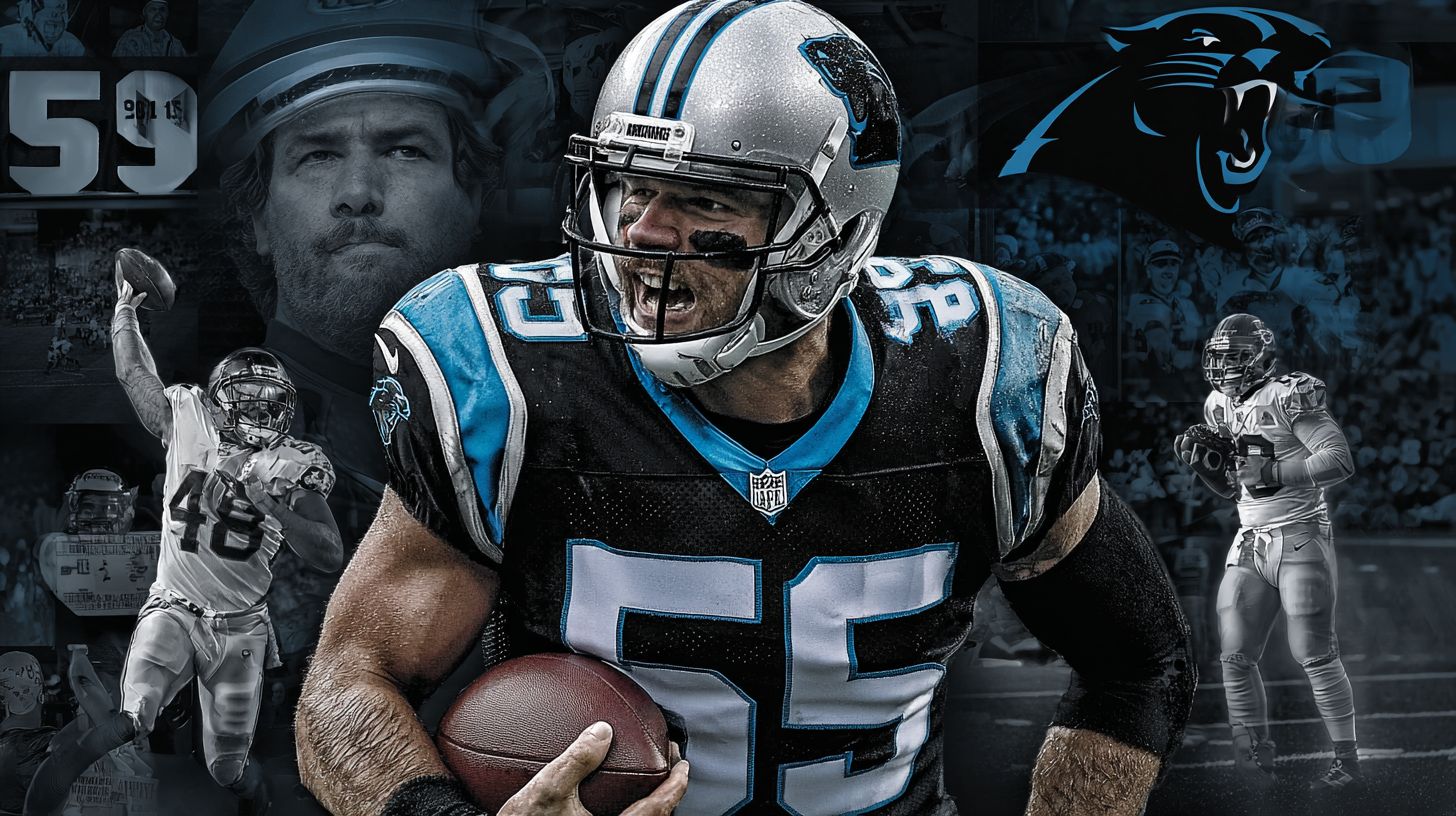
Carolina Panthers history article expansion dreams in 1993 to the thrill of two Super Bowl appearances, the Carolina Panthers have etched a rollercoaster saga in NFL lore.
This franchise’s journey-marked by Dom Capers’ playoff breakthrough, John Fox’s Super Bowl XXXVIII charge, Cam Newton’s MVP dominance, and recent rebuilds under new ownership-captures resilience amid triumphs and trials.
Discover the pivotal eras that shaped Charlotte’s gridiron warriors.
Franchise Origins and Founding

The Carolina Panthers emerged as the NFL’s 30th franchise when Charlotte businessman Jerry Richardson’s $206 million bid won the expansion announcement on October 26, 1993, beating out St. Louis for the rights. Richardson transitioned from an NFL player with the Colts and Rams to a successful fast-food chain owner. His journey highlighted determination to bring professional football to the Carolinas.
The expansion process involved competing bids from cities like St. Louis, Baltimore, and Memphis. Key selection criteria included stadium commitments and market size. Richardson’s group paid $140 million upfront as the NFL expansion fee, plus $66 million for infrastructure.
NFL owners favored Richardson after he lobbied 23 of 28 during pre-announcement meetings. The announcement came at a gala in New York’s Waldorf-Astoria hotel. Richardson shared his vision, stating, ‘We’ll build a winner for the Carolinas.’
This founding moment set the stage for the Panthers’ history in Charlotte, North Carolina. Local support grew quickly with plans for Ericsson Stadium. The franchise aimed to unite fans across North and South Carolina from day one.
Expansion Announcement (1993)
On October 26, 1993, NFL Commissioner Paul Tagliabue announced Carolina as the NFL’s first new franchise in 17 years during a Waldorf-Astoria gala, awarding Richardson’s group after they outbid St. Louis’ $195 million offer. The event drew media attention and celebrated the expansion team’s arrival. Richardson’s persistence paid off after months of preparation.
Pre-announcement, Richardson met with 23 of 28 NFL owners to build support. His bid totaled $206 million, split as $140 million expansion fee and $66 million for stadium costs. The ownership group featured 14 local investors, emphasizing community roots.
Competing cities included St. Louis, which offered less, plus Baltimore and Memphis with weaker stadium plans. Post-announcement, Charlotte hosted a rally for 150,000 fans. Celebrations marked the start of Panthers fever in the region.
- Richardson’s lobbying secured key owner votes.
- Bid focused on Ericsson Stadium naming rights early.
- Immediate planning led to the 1995 inaugural season.
- Group stressed regional appeal for North and South Carolina fans.
Stadium development kicked off right away, laying groundwork for Bank of America Stadium later. This announcement fueled excitement for the NFC South future and rivalries with teams like the Atlanta Falcons.
Early Years and First Stadium (1995-1995-1998)
Launching from Ericsson Stadium in 1995, the Panthers exceeded expectations with a 7-9 debut under Dom Capers, featuring the ‘Domeheads’ defense that held opponents to 16.8 points per game. The franchise, founded in 1993 as an expansion team by Jerry Richardson, sold 17,000 season tickets in just 17 hours. This excitement marked the start of Carolina Panthers history in Charlotte, North Carolina.
The inaugural roster came from the expansion draft with 87 picks, including Kerry Collins selected fifth overall. Training camp at Wofford College built team chemistry for the new NFL entry. The home opener against the Pittsburgh Steelers on September 10, 1995, ended in a 20-17 overtime loss, yet it showcased early promise.
Despite the 7-9 record, fanbase growth surged with average attendance near 58,000 per game. Ericsson Stadium became a hub for Panther nation in the Carolinas. These years laid the foundation for future success, including playoff runs and Super Bowl appearances.
Key elements like the black and blue uniforms and leaping panther logo quickly won over fans. Community ties strengthened through Richardson’s philanthropy. The early momentum set the stage for the NFC South rivalries with teams like the Atlanta Falcons and New Orleans Saints.
Debut Season and 7-9 Record
Exceeding expansion team expectations, the 1995 Panthers finished 7-9 under Dom Capers, winning their final 4 games including upsets over Saints (23-20) and Jets (26-20 OT). Kerry Collins led with 2,322 passing yards and 14 touchdowns as the starting quarterback. This performance silenced doubters for the new franchise.
Running back Tommy Vardell rushed for 694 yards, while wide receiver Randy Baldwin hauled in 48 catches for 819 yards. The Domeheads defense recorded 27 sacks, with Kevin Greene topping at 11.5. Kicker Joe Nedney, an expansion draft gem, converted 86% of field goals.
Game highlights included the Week 17 win over the Giants, securing the first winning record in team history. Earlier clashes featured the home opener loss to Pittsburgh and gritty road battles. These moments built resilience in the inaugural season.
The expansion draft yielded standouts like Nedney and defensive anchors. Training at Wofford fostered unity among players like Collins and Greene. This 7-9 finish marked the start of Carolina’s NFL legacy, paving the way for the 15-1 record in 1996.
Dom Capers Era and First Playoff Run
Dom Capers’ 1996 Panthers stormed to a 14-2 regular season record (14-1 at home), best in franchise history, behind Steve Beuerlein’s 4,436 passing yards and the suffocating Domeheads defense.
The roster evolved with additions like RB William Floyd for a stronger ground game and S Sam Mills bolstering the secondary. This expansion team, founded in 1993 by Jerry Richardson in Charlotte, North Carolina, achieved a perfect 8-0 home record at Ericsson Stadium, now Bank of America Stadium. They claimed the NFC West title, marking the franchise’s first winning division.
In the playoffs, Carolina beat the Eagles 27-24 in overtime during the divisional round. They then crushed the 49ers 30-13 in the NFC title game before falling in Super Bowl XXXII. The defense ranked #1 in points allowed at 13.3 per game, showcasing the Domeheads’ lockdown style with players like Mills and Kevin Greene.
Capers built on the inaugural 1995 season’s 7-9 record, turning the Panthers into contenders. Key contributors included WR Rod Smith and TE Wesley Walls. This run set the tone for Carolina’s NFC South rivalries with teams like the Atlanta Falcons and New Orleans Saints.
1996 NFC Championship Appearance
January 12, 1997: Panthers demolished Steve Young’s 49ers 30-13 at Sun Devil Stadium, with Sam Mills’ INT return and two John Kasay FGs securing Dom Capers’ first NFC Championship trip.
Beuerlein went 19/29 for 331 yards and 3 TDs, driving the offense. Defensive stands shone, including Mills’ pick and Tedy Bruschi’s fumble recovery. Carolina dominated statistically with 404 total yards to San Francisco’s 222, highlighting the Domeheads’ pressure.
Post-game, Capers said the “Domeheads took over”, crediting their veteran leadership. This victory capped a 14 straight undefeated home streak, fueling fan excitement in the Carolinas. It previewed Super Bowl XXXII against the Packers, where Carolina lost 30-13 despite a valiant effort.
The game featured clutch plays like Kasay’s field goals and Beuerlein’s precise passes to Walls. It remains a franchise milestone in Panthers history, echoing the grit of players like Thomas Davis in later eras. Dom Capers’ scheme proved expansion teams could contend quickly in the NFL.
John Fox Era and Super Bowl Glory
John Fox’s 2003 Panthers finished 11-5, riding Jake Delhomme’s 3,563 passing yards and Stephen Davis’ 1,432 rushing yards to NFC Championship victory over Eagles before Super Bowl XXXVIII. The team built its roster with a $10 million free agent signing of Davis, who anchored the ground game. Delhomme emerged as starter in Week 3, sparking the offense.
A 9-game win streak propelled Carolina through the regular season. The defense ranked second in scoring, allowing just 16.6 points per game. John Fox’s 4-3 scheme emphasized pressure and coverage, key to the team’s rise.
In the playoffs, the Panthers showed dominance with an upset over the top-seeded St. Louis Rams, winning 29-23 in overtime during the divisional round. They followed with a 14-3 shutout of the Eagles in the NFC title game. This run marked the franchise’s first Super Bowl appearance since its founding in 1993 as an expansion team in Charlotte, North Carolina.
Fox’s leadership transformed the Panthers into contenders in the NFC South. Players like Steve Smith and the Domeheads defense remnants provided grit. The era boosted fanbase excitement at Bank of America Stadium, setting the stage for future playoff pursuits.
2003 Super Bowl XXXVIII
February 1, 2004 at Reliant Stadium: Panthers fell 32-29 to Tom Brady’s Patriots in Super Bowl XXXVIII classic, with Jake Delhomme’s 272 yards and 1 touchdown and John Kasay’s missed 41-yard field goal proving decisive. The game showcased a thrilling fourth-quarter comeback by Carolina, erasing a 22-point deficit. Delhomme connected with Steve Smith for a 39-yard touchdown pass.
Quarter by quarter, the Panthers converted 14 of 21 third downs and amassed 404 total yards. The Patriots led early, but Carolina’s defense stiffened in the second half. Turning points included Kasay’s missed kick and Adam Vinatieri’s twin field goals for New England.
Vinatieri earned MVP honors with his perfect 2-for-2 field goal performance under pressure. The Panthers’ resilience highlighted their defensive rankings and offensive firepower. This marked the franchise’s first Super Bowl trip, elevating the team’s profile.
The loss fueled motivation for the Carolinas fanbase, with attendance rising the next season. It remains an iconic moment in Panthers history, alongside later runs like the 2015 campaign. John Fox’s squad proved expansion teams could compete for gridiron glory.
Post-Super Bowl Rebuilding (2004-2010)
From 2004-2010, John Fox maintained a 44-36 record (.550) with 4 playoff appearances, leveraging DeAngelo Williams and Jonathan Stewart’s ‘Thunder & Lightning’ backfield (2,800+ combined rush yds 2008). The era began with smart salary cap management, including $120M savings from the Deuce McAllister trade in 2004. This allowed the Carolina Panthers to rebuild after Super Bowl XXXVIII.
The 2005 season brought an 11-5 record and NFC South title under Fox’s steady leadership. Defensive star Julius Peppers anchored the unit with 40 sacks over these years. Yearly records showed ups and downs: 2004: 7-9, 2005: 11-5, 2006: 8-8, 2007: 7-9, 2008: 12-4, 2009: 8-8, 2010: 2-14 injury collapse.
Fox’s teams stayed competitive in the NFC South against rivals like the Atlanta Falcons and New Orleans Saints. The ‘Thunder & Lightning’ duo powered the ground game during contending years. Peppers earned All-Pro honors as a sack leader, highlighting the defensive strength.
Despite the 2010 collapse from injuries, this period built a foundation for future success. Fan support grew at Bank of America Stadium in Charlotte, North Carolina. The franchise navigated rebuild phases with key draft picks and veteran mentors.
Consistent Playoff Contention
2005 NFC South champions (11-5) beat Bears 23-13 Wild Card before losing to Seahawks; 2008’s 12-4 squad fell to Kurt Warner’s Cardinals 33-13 in Divisional despite Steve Smith Sr.’s 110 rec yds. In the 2005 Wild Card, Julius Peppers recorded 2 sacks against Chicago. These games showcased the Panthers’ playoff resilience.
The Thunder & Lightning backfield shone in 2008, with Williams rushing for 1,515 yards and Stewart adding 836. Both earned Pro Bowl selections that year. Steve Smith posted 12 receptions for 136 yards in the Divisional loss.
Peppers signed a franchise-record $9.25M per season contract in 2009, bolstering the defense. Fan attendance peaked at 74,456 average in 2008, reflecting strong Panther nation support. The team hosted thrilling home games with the Keep Pounding drum echoing.
These playoff runs featured defensive stands and rushing attacks that defined the Fox era. Players like Thomas Davis and Ryan Kalil provided locker room leadership. The period mixed contention with lessons for the franchise’s NFL history.
Cam Newton Era and Second Super Bowl
Cam Newton’s 2011 #1 overall draft ignited 5 straight winning seasons, peaking with 2015’s NFL MVP campaign (3,837 pass yds, 636 rush yds, 45 total TD) and 15-1 record. The Panthers traded the 2nd and 33rd picks to the Patriots to secure him. This move sparked a zone-read offense evolution that led the league with 10.2 yards per rush in 2015.
Newton’s dual-threat style transformed the Carolina Panthers attack. Tight end Greg Olsen provided reliable targets with 1,104 receiving yards that year. Linebacker Luke Kuechly, earning Defensive Player of the Year honors, anchored the defense alongside Thomas Davis and Shaq Thompson.
The regular season dominance fueled playoff progression. Carolina beat the Seahawks and Cardinals before facing the Broncos in Super Bowl 50. This run highlighted the franchise’s contending years under head coach Ron Rivera.
Supporting cast depth, including Jonathan Stewart’s rushing and Ryan Kalil’s line play, sustained the momentum. The era built on earlier successes like Super Bowl XXXVIII. It cemented Newton as a Panthers legend in Charlotte, North Carolina.
2015 NFC Championship and Super Bowl 50
January 17, 2016: Newton’s 41-yard TD run sealed 49-15 NFC Championship demolition of Arizona; Super Bowl 50 (Feb 7) saw 24-10 loss to Broncos as Von Miller’s 2.5 sacks forced 2 turnovers. In the NFC title game, Newton tallied 335 total yards and 2 touchdowns. Kuechly added 11 tackles to stifle the Cardinals.
Super Bowl 50 exposed defensive challenges from Denver’s front. Newton managed 152 passing yards and 45 rushing yards but lost a key fumble on the goal line. Despite the defeat, he captured 48 of 50 first-place MVP votes.
The 15-1 mark set franchise records as the best regular-season finish and first with 14-plus wins. Postgame, Newton’s walk-off sparked controversy over leadership. It contrasted the Panthers’ dominant path through Seattle and Arizona.
Bank of America Stadium hosted fan celebrations amid the run. The loss fueled Panther nation resolve for future Lombardi pursuits. Key moments like Newton’s championship sprint defined the Cam Newton era.
Ron Rivera and Post-Newton Transition
Ron Rivera’s 9-year tenure (2013-2020) delivered 3 NFC South titles and a 76-63-1 (.546) record, transitioning from Newton peak through McCaffrey’s 2019 Offensive Player of the Year (1,387 rush/1,005 rec yds).
Rivera built a strong coaching tree that influenced the NFL. His defensive coordinator Sean McDermott later led the Buffalo Bills to success. Eric Washington also carried forward Rivera’s defensive principles.
The 2017 season peaked with an NFC Championship loss to the Saints, 29-24, marked by the infamous ‘Minicamp’ pass interference non-call. Key personnel like Luke Kuechly shone before his sudden retirement. Christian McCaffrey emerged as a league MVP candidate in 2019.
Rivera’s firing came after a 5-11 record in the COVID-shortened 2020 season. This era shifted the Panthers from Cam Newton’s dominance to a new rebuild phase under David Tepper’s ownership.
Rivera’s Coaching Tree Impact
Rivera’s staff produced top coordinators who became head coaches. Sean McDermott, his DC from 2011-2016, took Buffalo to playoffs multiple times with aggressive defenses. Eric Washington continued as DC, maintaining Carolina’s tough front.
The tree emphasized 4-3 defense schemes and player development. Rivera mentored coordinators on game management and culture building. This influence spread across the NFC South rivalries.
Experts note how Rivera’s hires like McDermott adapted zone read offenses. Their success highlighted Carolina’s role in modern NFL coaching pipelines.
Key Moments: 2017 NFC Championship and Kuechly Retirement
The 2017 NFC Championship against New Orleans ended in heartbreak, 29-24. A non-called pass interference on Tommylee Lewis in the end zone sparked debates on officiating. It capped a strong Panthers playoff run.
Luke Kuechly, a 6x All-Pro, retired abruptly in 2020 after concussion concerns. His leadership anchored the Domeheads defense legacy from earlier years. The Panthers lost a locker room cornerstone.
These events marked the post-Newton transition, blending veteran grit with emerging stars.
McCaffrey Era and Rivera’s Exit
Christian McCaffrey defined the McCaffrey era, blending rushing and receiving prowess in 2019. He became Offensive Player of the Year, easing Cam Newton’s decline. This versatility fit Rivera’s balanced attacks.
The 2020 season, hit by COVID protocols, ended 5-11. Rivera was fired amid ownership changes under David Tepper. It closed a chapter of contending years in Carolina history.
The transition paved the way for new coaches like Frank Reich, signaling rebuild phases ahead.
Recent Ownership Changes and Rebuild
David Tepper’s $2.275 billion purchase in July 2018 set an NFL record and triggered a rebuild for the Carolina Panthers. The move brought fresh investment to the franchise founded in 1993 as an expansion team in Charlotte, North Carolina. Ownership shifts aimed to modernize operations and boost competitiveness in the NFC South.
Tepper’s net worth reached notable heights by 2023, fueling facility upgrades like the Atrium Health Dome at Wofford for training camp. The Panthers selected Bryce Young with the number one pick in 2023 after a dismal 1-15 record. Frank Reich’s firing after 11 games that year marked early coaching changes in the rebuild.
A GM carousel saw Marty Hurney give way to Scott Fitterer, who managed draft capital including nine top-60 picks in 2023. Salary cap space sat comfortably under limits in 2024, allowing flexibility for young development. A $800 million renovation for Bank of America Stadium was announced in 2022 to enhance fan experience.
Rebuild phases focused on rookie growth, with Young stepping in as the face of the future alongside talents like those from recent drafts. Experts recommend patient development for quarterbacks like him, drawing parallels to past stars such as Cam Newton. This era builds on the Panthers’ history of resilience from Super Bowl runs to tough NFC South rivalries.
Frequently Asked Questions
What is the Carolina Panthers history article about?
The Carolina Panthers history article provides a comprehensive overview of the team’s origins, key milestones, and evolution since its inception in the NFL, highlighting iconic moments in Carolina Panthers history article.
When was the Carolina Panthers history article first published?
The Carolina Panthers history article was initially published in 2015 to commemorate the team’s 20th anniversary, with updates added regularly to reflect new chapters in Carolina Panthers history article.
Who are some key figures mentioned in the Carolina Panthers history article?
The Carolina Panthers history article features legends like quarterback Cam Newton, owner Jerry Richardson, and coaches such as Ron Rivera, all central to pivotal events in Carolina Panthers history article.
What major achievements are covered in the Carolina Panthers history article?
The Carolina Panthers history article details the team’s 1996 NFC Championship win, multiple playoff appearances, and Super Bowl 50 run, encapsulating the triumphs in Carolina Panthers history article.
How can I access the full Carolina Panthers history article?
You can find the complete Carolina Panthers history article on the official Panthers website or sports archives like NFL.com, offering in-depth insights into Carolina Panthers history article.
Why is the Carolina Panthers history article important for fans?
The Carolina Panthers history article is essential for fans as it preserves the franchise’s legacy, from expansion team struggles to modern successes, enriching appreciation of Carolina Panthers history article.