
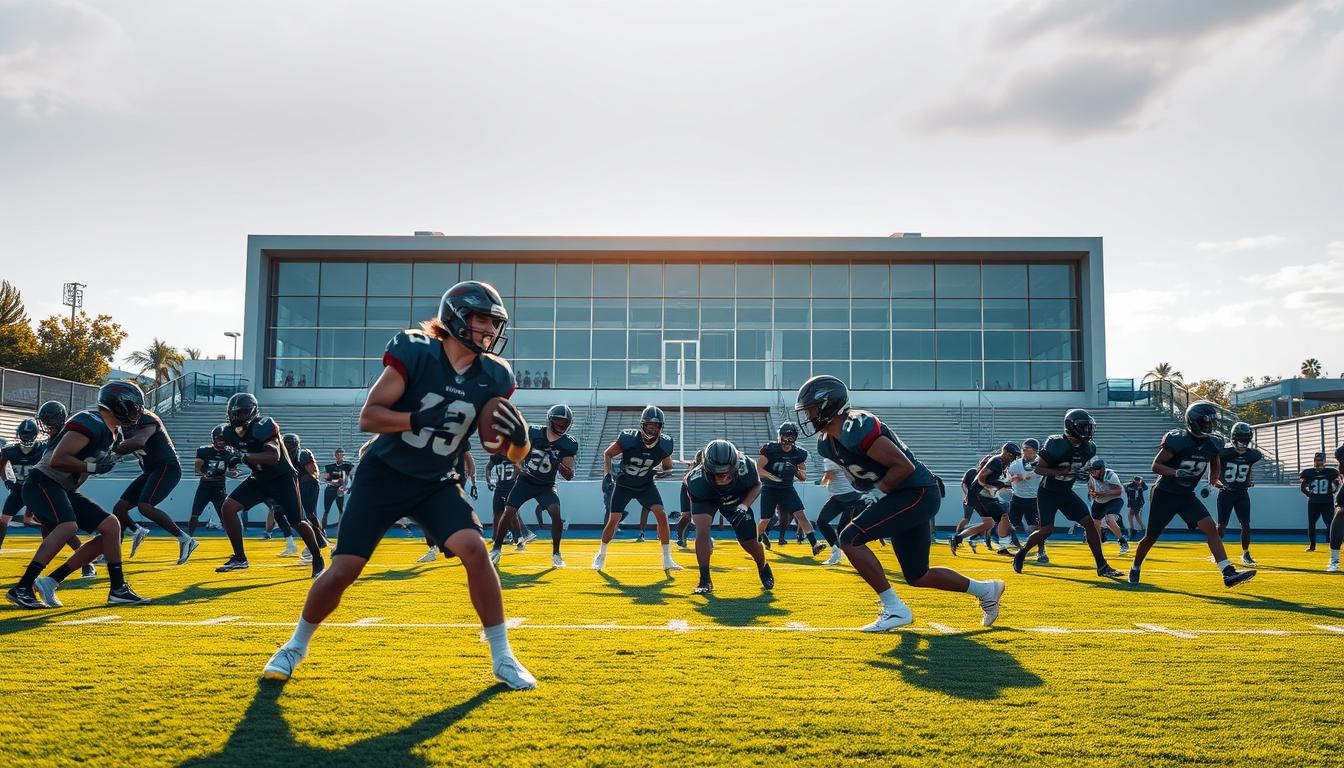
Mastering the skills needed for american football training is key for players wanting to get better. A good training plan boosts physical fitness and sharpens tactics and teamwork.
Key Takeaways
- Understanding the importance of a well-structured training program.
- Improving physical conditioning through strength and agility drills.
- Enhancing tactical awareness and teamwork.
- Focusing on strategic planning for better game performance.
- Implementing effective training techniques to elevate player skills.
The Fundamentals of American Football Training
American football training focuses on the sport’s physical and mental challenges. A good training plan is key for athletes to get ready for games.
Physical and Mental Components
American football training covers many areas. Physical training includes building strength, improving speed and agility, and boosting endurance. Mental preparation helps with focus, discipline, and strategy.
- Strength and conditioning exercises to improve power and resilience
- Speed and agility training to enhance on-field performance
- Mental toughness techniques to build resilience and focus
Position-Specific Requirements
Each position on the field has its own needs, needing special training.
Offensive Position Demands
Offensive players, like quarterbacks and wide receivers, need training in speed, agility, and precision. Quarterbacks work on accuracy and decision-making skills. Wide receivers practice route running and catching techniques.
Defensive Position Demands
Defensive players, including linemen and defensive backs, focus on strength, speed, and quick reactions. Linemen aim for explosive strength to tackle opponents. Defensive backs work on agility and quick reaction times to cover receivers.

American Football Training
Knowing these specific needs is vital for creating effective training plans.
Essential Equipment for Effective Training
Good American football training needs the right gear for safety and better performance. Players need protective gear and special training tools to get ready for the game.
Protective Gear for Safe Practice
Protective gear is key to avoid injuries during training. This includes:
Helmets and Pads
A good helmet and shoulder pads are vital for safety. They protect players from head and body injuries.
“Properly fitted helmets can reduce the risk of head injuries by up to 20%.”
Supportive Footwear
Cleats made for football give the right grip and support. Players should pick cleats that fit well and match their position and the field.
Training Aids and Equipment
Along with protective gear, training tools boost strength, agility, and speed.
Resistance Training Tools
Resistance bands and weighted vests help build strength and endurance.
Agility and Speed Equipment
Cones and
Using the right equipment in training helps players perform better and stay safe.
Developing a Periodized American Football Training Program
American football training needs a periodized approach. This ensures players are ready physically and mentally for the season. A periodized program adjusts training intensity, volume, and focus based on the athletes’ needs at different times.
Off-Season Training Focus
The offseason focuses on building strength, endurance, and agility. This phase is key for developing the physical skills needed for success in American football.
Building Strength and Size
Strength training is vital in the off-season. Resistance exercises help athletes build the power for explosive movements. As “Strength is the foundation upon which all other athletic abilities are built.” – many coaches and trainers agree.
Correcting Weaknesses
Identifying and fixing weaknesses is also important in the off-season. This might involve specific exercises or training programs. They aim to improve flexibility, mobility, or correct imbalances that could lead to injury.
Pre-Season Preparation
As the off-season ends, the focus shifts to pre-season preparation. This phase focuses on sport-specific conditioning. Athletes start preparing for the specific demands of American football.
Sport-Specific Conditioning
Training in this phase includes drills and exercises that mimic game movements and intensity. This helps athletes build the endurance and agility needed for competition.
In-Season Maintenance
Once the season starts, the focus is on maintaining physical and mental gains. In-season training balances recovery with the demands of weekly games.
Recovery-Focused Training
“Recovery is just as important as training.” In the in-season phase, recovery techniques like stretching, foam rolling, and nutrition planning are key. They help maintain athlete health and performance.
By using a peziodized training program, coaches and trainers can prepare athletes for American football. This maximizes their chances of success.
Strength Training Fundamentals for Football Players
Strength training is key for football players. It boosts their power and endurance. A good strength training plan helps them perform better in games.
Lower Body Strength Development
Lower body strength is vital for football players. It helps them move fast, stop quickly, and change direction. Working on the legs and hips is important.
Squat Variations and Programming
Squats are essential for building lower body strength. There are many types, like back squats and front squats. They target different muscles and increase strength.
Hip Development Exercises
Deadlifts and glute bridges are great for the hips. They boost power and stability. This helps players stay strong and stable during games.
Upper Body Power Exercises
Upper body strength is also key, for blocking or tackling. Exercises that improve pushing and pulling are vital.
Bench Press and Pushing Movements
The bench press is great for upper body pushing strength. Incline and decline presses work different parts of the chest and shoulders.
Pull and Row Variations
Rows and lat pulldowns are important for a strong back. They improve overall upper body strength.
Core Stability Training
Core stability is essential for posture, power, and injury prevention. A strong core lets players perform at their best.
Rotational Power Development
Exercises like medicine ball throws boost rotational power. They help players generate force in different directions.
Anti-Rotation Exercises
Exercises like Pallor presses improve core stability. They prevent excessive rotation and injury.
| Exercise | Primary Muscle Group | Secondary Muscle Group |
| Squats | Quadriceps | Glutes, Hamstrings |
| Deadlifts | Hamstrings | Glutes, Lower Back |
| Bench Press | Pectoralis Major | Anterior Deltoids, Triceps |
“A strong foundation in strength training is not just about lifting heavy; it’s about building a resilient athlete capable of withstanding the demands of the game.”
By focusing on lower body strength, upper body power, and core stability, football players can improve a lot. They can also reduce injury risks.
Speed and Agility Drills to Enhance On-Field Performance
To get better on the field, players need a good training plan. This plan should focus on speed and agility drills. These drills help players get faster and more agile.
Linear Speed Development
Linear speed is key for football players. Coaches use special training to help improve it.
Sprint Technique Training
Good sprint technique is vital for speed. Drills that work on posture, stride, and foot strike can boost a player’s speed.
Acceleration Drills
Getting fast is all about quick acceleration. Resistance band training and hill sprints are great for this.
Change of Direction Exercises
Being able to change direction fast is important. Players need to learn and practice different techniques.
Cutting Mechanics
Good cutting involves hip and knee alignment and explosive power. Drills that focus on these can make players more agile.
Lateral Movement Drills
Defensive players need to be good at moving sideways. Shuttle runs and cone drills help with this.
Reaction Time Drills
Fast reactions can make a big difference. There are many drills to help with this.
Visual Stimulus Reactions
Reacting to visual cues, like a coach’s signal, is important. Reaction training with visual cues can speed up a player’s response.
Auditory Reaction Training
Auditory cues, like a whistle, can also improve reaction times. Auditory reaction drills help players react fast to sounds.
In summary, a good training program should include speed training, agility drills, and reaction time exercises. This can greatly improve a football player’s performance on the field.
Position-Specific American Football Training
Effective American football training needs a tailored approach. Each position has its own demands. A one-size-fits-all program can hold a player back.
Quarterback Training Drills
Quarterbacks need training that focuses on their unique responsibilities. This includes throwing accuracy and making decisions under pressure.
Throwing Mechanics and Accuracy
Drills that improve throwing mechanics include:
- Short, medium, and long-distance throws to enhance accuracy
- Throwing with both hands to develop ambidexterity
- Weighted ball throws to build arm strength
Footwork and Pocket Movement
Effective quarterbacks must master footwork and pocket movement. This helps them evade defenders and deliver passes.
- Agility ladder drills for quick footwork
- Pocket presence drills to improve movement within the pocket
Running Back Skill Development
Running backs need training that enhances their vision, decision-making, and ball security.
Vision and Decision Making
Drills to improve vision include:
- Reading defensive schemes
- Reacting to different defensive alignments
Ball Security Techniques
To minimize fumbles, running backs should practice:
- Securing the ball in different positions
- Ball handling drills during contact
Receiver Route Running and Catching
Receivers need to develop precise route running skills and reliable catching abilities.
Hand-Eye Coordination Drills
Drills include:
- Catching passes from different angles
- High and low ball catching drills
Route Precision Training
Receivers should practice running precise routes. They should focus on:
- Timing and spacing
- Adjusting routes based on defensive coverage
Linemen Technique Training
Linemen, both offensive and defensive, require specialized training to improve their technique.
Hand Placement and Leverage
Drills focus on:
- Proper hand placement for blocking or tackling
- Using leverage to gain an advantage
Footwork and Balance Drills
Linemen must practice:
- Quick, agile footwork
- Maintaining balance during contact
Defensive Position Drills
Defensive players need training tailored to their specific roles. This includes defensive backs, linebackers, or defensive linemen.
Tackling Fundamentals
Drills include:
- Proper tackling technique
- Tackling in different scenarios
Coverage Techniques
Defensive backs should practice:
- Man-to-man coverage
- Zone coverage techniques
By focusing on position-specific training, teams can develop well-rounded players. These players excel in their roles, improving the team’s overall performance.
Mastering Football Fundamentals Through Drill Work
Good football training starts with solid basics. Players need to master the fundamentals to do well. This part will cover the key drills for tackling, blocking, and keeping the ball safe.
Tackling Technique and Safety
Safe tackling is key for player safety and team success. It needs strength, agility, and good coordination.
Proper Head and Body Positioning
Proper head and body positioning is essential for safe tackling. Players should keep their heads up and use their shoulders to hit.
Progressive Contact Drills
These drills help players tackle safely and effectively. They start with light contact and get harder.
Blocking Fundamentals
Blocking is vital in football. It needs technique, strength, and strategy. Good blocking can make a big difference.
Drive Blocking Technique
Drive blocking uses the legs to push the block. It keeps the center of gravity low and makes contact with the shoulder. This is key for linemen.
Pass Protection Drills
These drills improve a player’s ability to protect the quarterback. They focus on footwork, hand placement, and quick reactions.
| Drill Type | Purpose | Key Focus |
| Drive Blocking | Improve linemen blocking technique | Leg drive, low center of gravity |
| Pass Protection | Enhance quarterback protection | Footwork, hand placement |
Ball Security Drills
Keeping the ball safe is critical in football. Drills focus on holding the ball during hits and carrying it right.
Contact Fumble Prevention
Drills that mimic contact teach players to keep the ball when hit or tackled.
Ball Carrying Mechanics
Good ball carrying means keeping it close to the body. Use the arm to protect it and run with purpose.
By working on these basics through drills, football players can get better and stay safe.
Conditioning Protocols for Football Endurance
Effective conditioning is key for football players to boost endurance. These methods aim to increase stamina, enhance performance, and lower injury risk.
Interval Training Methods
Interval training is a core part of football conditioning. It mixes high-intensity exercise with rest periods.
Sprint-Based Conditioning
This training focuses on quick, all-out efforts followed by rest. It boosts acceleration and speed endurance.
Position-Specific Energy System Training
Each football position needs its own training. Linemen work on strength and power. Wide receivers focus on speed and agility training.
Game-Specific Conditioning
Game-specific conditioning prepares players for real game demands. It’s about getting ready for the physical challenges of a game.
Simulating Game Situations
Coaches use drills that mimic game scenarios. These include quick changes in direction, fast speed bursts, and long-lasting activity.
Recovery Between High-Intensity Efforts
Recovery is vital in conditioning. Good recovery strategies help players perform better in future high-intensity efforts.
Active Rest Strategies
Active rest means doing low-intensity activities like jogging or swimming. These help with blood flow and removing waste products.
| Conditioning Method | Description | Benefits |
| Interval Training | Alternating between high-intensity exercise and active recovery | Improves cardiovascular endurance, increases speed and agility |
| Sprint-Based Conditioning | Short bursts of maximum effort followed by rest | Enhances acceleration and speed endurance |
| Game-Specific Conditioning | Simulating game situations | Prepares players for game demands, improves performance under pressure |
Nutrition Strategies for American Football Athletes
American football athletes need to pay attention to their diet as much as their training. A balanced diet is key for better performance, recovery, and health.
Macronutrient Requirements for Performance
Knowing how macronutrients work is important for a good nutrition plan. Athletes need proteins, carbs, and fats to have enough energy and recover well.
Protein Needs for Recovery and Growth
Protein is essential for fixing and growing muscles. Athletes should eat 1.2-2.0 grams of protein per kilogram of body weight daily to help with recovery and muscle growth.
Carbohydrate Timing for Energy
Carbs are the main energy source for athletes. Eating carbs before and after training helps improve performance and aids in recovery.
| Macronutrient | Function | Recommended Intake |
| Protein | Muscle repair and growth | 1.2-2.0 g/kg body weight |
| Carbohydrates | Energy source | 2-3 g/kg body weight |
| Fats | Energy source and hormone regulation | 0.5-1.0 g/kg body weight |
Pre and Post-Training Nutrition
Eating right before and after training is key for performance and recovery. Athletes should have a meal with carbs and protein 1-3 hours before training and within 30-60 minutes after training.
Meal Timing and Composition
The right foods and when to eat them matter a lot. Athletes should aim for complex carbs and lean proteins to meet their energy needs.
Hydration Protocols for Practice and Games
Drinking enough water is vital for staying hydrated and avoiding dehydration. Athletes should drink 17-20 ounces of fluid 2-3 hours before exercise and 7-10 ounces every 10-20 minutes during exercise.
Electrolyte Replacement Strategies
Electrolytes are lost through sweat and need to be replaced to stay hydrated and avoid muscle cramps. Athletes can use sports drinks or electrolyte-rich beverages during long activities.
Recovery Methods to Maximize Training Adaptations
Recovery is key for football players to get the most out of their training. It helps them fix and grow muscle, refill energy, and get used to training. This is how they perform at their best.
Sleep Optimization for Athletes
Sleep is vital for recovery. It helps fix and adapt the body. Athletes need 7-9 hours of sleep each night for the best recovery.
Sleep Quality Enhancement Techniques
To get better sleep, athletes should stick to a sleep schedule. They should also make their sleep area comfy and avoid screens before bed. Relaxation techniques like deep breathing or meditation can also help.
Active Recovery Techniques
Active recovery means doing low-intensity activities. These help blood flow and clear out muscle waste. Light cardio and stretching exercises are good examples.
Soft Tissue Work and Mobility
Massage and foam rolling can ease muscle soreness and improve movement. Regular stretching also helps with range of motion and injury prevention.
Managing Soreness and Preventing Overtraining
It’s important to manage soreness and avoid overtraining. Good nutrition, hydration, and rest are key for recovery.
Monitoring Recovery Status
Athletes can check their recovery with heart rate variability (HRV) monitoring, how they feel, and performance tests. This helps coaches and athletes fine-tune training for better recovery and performance.
Mental Training Aspects of American Football
Mental preparation is just as important as physical training for football players. It helps them perform better under pressure, stay focused, and be resilient.
Developing Football IQ and Game Awareness
Football IQ is about knowing the game well. This includes strategies, player positions, and tactics. Players can improve their IQ by:
- Watching game footage to learn from others
- Doing drills to get better at recognizing plays
Film Study Strategies
Watching game footage helps players see their own strengths and weaknesses. It also lets them study opponents and guess their moves.
Play Recognition Drills
These drills mimic game situations. They help players react fast and make smart choices during games.
Visualization and Mental Rehearsal
Visualization is about mentally going through game scenarios. It prepares players for different situations. Techniques include:
- Doing pre-game routines to get ready
Pre-Performance Routines
Having a consistent pre-game routine gets players in the right mindset. It boosts their performance.
Focus and Concentration Training
To stay focused during games, players can practice:
- Simulating high-pressure situations in training
Pressure Situation Simulation
Training in high-pressure situations builds mental toughness. It helps players perform well even when it’s tough.
| Mental Training Technique | Description | Benefit |
| Film Study | Analyzing game footage | Improved game awareness |
| Visualization | Mentally rehearsing game scenarios | Enhanced performance under pressure |
| Pressure Situation Simulation | Simulating game pressure during training | Increased mental toughness |
By using these mental training methods, football players can get ahead. They’ll perform better and have more success on the field.
Injury Prevention Strategies in Football Training
Injury prevention is key in American football training. It affects a player’s career and team success. Good strategies include warm-ups, cool-downs, exercises, and safe training steps.
Proper Warm-Up and Cool-Down Protocols
A good warm-up gets athletes ready for physical demands. It lowers the risk of muscle strains and injuries. Dynamic warm-up sequences are best because they match football movements and intensity.
Dynamic Warm-Up Sequence
A dynamic warm-up includes jogging, high knees, and lateral shuffles. It’s followed by drills specific to football. This prepares muscles and the heart for top performance.
Post-Training Recovery Routines
Cooling down after training is just as important. It helps remove waste and reduces muscle soreness. Static stretching and foam rolling are good when done right.
Rehabilitation Exercises for Common Football Injuries
Rehabilitation strengthens muscles and stabilizes joints often hurt in football. This includes the shoulders, knees, and ankles.
Shoulder Stability Work
Exercises like external rotation with resistance bands boost shoulder stability. This lowers the risk of dislocations and separations.
Knee and Ankle Injury Prevention
Exercises like squats and calf raises strengthen knee and ankle muscles. This reduces injury risk in these areas.
Safe Training Progression Guidelines
Increasing training loads safely is vital to avoid overtraining and injuries. Coaches and trainers must follow load management principles. This ensures athletes are not overworked.
Load Management Principles
This means watching training intensity, volume, and frequency. Adjustments are made based on athlete feedback and performance. Proper load management balances training stress and recovery.
Tracking Progress and Setting Performance Goals
Tracking progress and setting goals are key to a good football training program. Coaches can improve athlete performance by watching how players grow. This helps teams win games.
Key Performance Metrics for Football Players
To track progress, coaches need to watch certain key areas. These include:
- Strength and Power Benchmarks: Squats and bench presses show a player’s strength.
- Speed and Agility Standards: Sprints and agility drills check quickness and direction changes.
Strength and Power Benchmarks
Strength and power are vital for football players. The 40-yard dash and vertical jump tests these skills.
Speed and Agility Standards
Speed and agility are also key. Drills like the shuttle run and cone drills test quick starts and stops.
Testing Protocols to Measure Improvement
Regular tests are needed to see how players improve. Combine-Style Assessments are great for this. They test many skills like speed and strength.
Combine-Style Assessments
These tests include various drills. They check speed, agility, strength, and endurance.
Adjusting Training Based on Performance Data
After getting the data, coaches can tweak the training. This means:
- Identifying and Addressing Weaknesses: Coaches find and fix areas where players need work.
Identifying and Addressing Weaknesses
For example, if a player lacks lower body strength, more squats and lunges are added to the training.
Conclusion: Building Your Complete American Football Training Regimen
A well-structured American football training program is key to success on the field. By combining different training elements, players can boost their performance.
A good training plan includes strength exercises, speed drills, and skills specific to each position. It also covers conditioning. Each part is important for getting ready for the game.
It’s important to balance training with rest and recovery. This includes good nutrition, enough sleep, and active recovery. This way, players stay at their best all season.
Coaches and players should always check and tweak their training plans. This keeps the training effective and in line with the athlete’s goals.
By following this guide to American football training, athletes can improve their training. They can reach their highest level of performance.
FAQ
What are the essential components of American football training?
American football training includes physical and mental parts. It covers strength training, speed and agility drills, and conditioning. It also includes mental preparation like visualization and focus training.
How do I develop a periodized training program for American football?
A periodized training program is structured into phases. These phases are off-season, pre-season, and in-season. Each phase focuses on different goals, like building strength or maintaining performance.
What equipment is necessary for effective American football training?
Essential equipment includes helmets, pads, and supportive shoes. You also need training aids like resistance bands, agility ladders, and cones.
How can I improve my speed and agility for American football?
To improve speed and agility, do specific drills. These include sprint training, acceleration drills, and change of direction exercises. Tailor these drills to your position and needs.
What nutrition strategies are important for American football athletes?
Key nutrition strategies are meeting macronutrient needs and timing meals. Stay hydrated and use electrolyte replacement strategies. These support performance and recovery.
How can I prevent injuries during American football training?
Injury prevention involves proper warm-ups and cool-downs. Do rehabilitation exercises for common injuries. Follow safe training progression and manage training loads.
What are the best ways to recover between high-intensity training efforts?
Recovery strategies include sleep optimization and active recovery. Use soft tissue work and mobility exercises. Manage soreness by monitoring recovery and adjusting training.
How can I track my progress and set performance goals in American football training?
Track progress by monitoring key performance metrics. Use testing protocols to measure improvement. Adjust training based on performance data to address weaknesses.
What mental training aspects are important for American football players?
Mental training includes developing football IQ and game awareness. Use film study and play recognition drills. Also, practice visualization, mental rehearsal, and focus training, including pressure situation simulation.